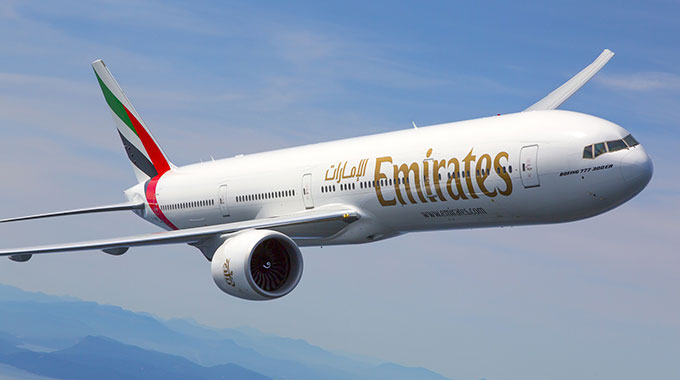
LEADING international airline, Emirates, yesterday announced that it will resume flights to Harare on the 1st of October 2020. Emirates suspended the service in March this year as part of measures to curb the spread of Covid-19 as many countries had also closed their international airports.
The resumption of flights comes as the Government has announced plans to reopen the country’s borders to people and traffic as part of measures to gradually relax lockdown restrictions that have been in place since March.
The airline also announced the resumption of services on other routes such as Johannesburg, Cape Town and Durban in South Africa and Mauritius. Zimbabwe has the potential to become an aviation hub given its strategic position in the region.
The resumption of services will expand Emirates’ global network to 92 destinations as the airline gradually resumes its operations while prioritising the safety of its customers, crew and the communities it serves around the world.
Emirates’ African network will also now extend to 19 cities. In a statement, Emirates said it will operate two weekly flights to Harare linked to its Lusaka service, which will allow passengers from the two destinations to connect to other destinations across Europe, the Far East, the Americas, Australasia and West Asia with one convenient stop in Dubai.
Emirates said it has implemented a comprehensive set of measures at every step of their customer’s journey to ensure the safety of its customers and employees on the ground and in the air.
These include the distribution of complimentary hygiene kits containing masks, gloves, hand sanitisers and antibacterial wipes to all customers.
The airline has also committed to cover Covid-19 related medical expenses, free of cost should any of its customers be diagnosed with Covid-19 during their travel.
“This cover is immediately effective for customers flying on Emirates until December 31, 2020, and is valid for 31 days from the moment they fly the first sector of their journey,” it said.
“This means Emirates customers can continue to benefit from the added assurance of this cover, even if they travel onwards to another city after arriving at their Emirates destination.” -@ The Chronicle
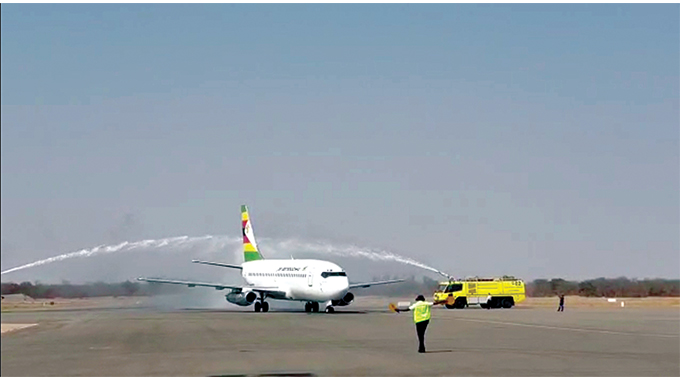
NATIONAL airline Air Zimbabwe yesterday made its maiden flight connecting the country’s three international airports, 179 days after it suspended operations on March 28 due to Covid-19.
There was excitement from the airliner, tourism industry and other stakeholders following the resumption of flights amid calls for locals to embrace travelling by air to promote domestic tourism.
The Boeing 737 departed RG Mugabe International Airport in Harare in the morning with about 30 passengers via Bulawayo where it dropped a few passengers at the JMN Nkomo International before landing at the Victoria Falls International at 9.35 am.
Upon landing, the airliner was welcomed by the usual rituals of cannon spraying before port health staff sanitised passengers and conducted temperature checks.
In Victoria Falls it dropped a handful of passengers while others who included tourism agents and operators departed for Harare with the same plane about an hour later.
One of the passengers Miss Perseverance Mahara from Harare could not hide her joy landing in Victoria Falls for the first time in her life.
An enthused Air Zimbabwe corporate communications officer Ms Firstme Vitori said necessary Covid-19 protocols had been put in place.
She said the airliner will be flying three times a week on Mondays-Wednesdays and Fridays on the Harare-Bulawayo-Harare route.
“It has been a long break since our last flight before lockdown and we are very excited to have resumed our operations today on the domestic front for now as we monitor demand. For our regional route, we are expecting to start on the 3rd of October on the Harare-Dar es Salaam route every Tuesday and Saturday and we hope to increase frequencies as the year progresses,” she said.
Ms Vitori said plans were underway to resume flights to South Africa next month using the ERJ145.
She said the airline will enforce the wearing of masks, sanitising of hands and temperature checks among other Covid-19 guidelines.
“What we want to assure our travelling public is that as Air Zimbabwe we have put in place all measures to ensure that their health and safety is protected.
“We are working with guidelines that are provided for by the Ministry of Health and Child Care, World Health Organisation (WHO) and International Air Transport Association and we will ensure that there is strict adherence to the guidelines.
“We also want to encourage the locals to come on board and travel with the national airline. We are working together with key stakeholders like Hospitality Association of Zimbabwe, tour operators and Zimbabwe Tourism Authority (ZTA) to ensure that we come up with packages that are affordable to locals. We want to resuscitate the Flame Lily brand which we are confident will come up with affordable packages for locals,” said Ms Vitori.
She said Air Zimbabwe targets flexibility and sustainability.
“As we resume our operations going into the future, we are looking at a period of three years when we should be home to modern aircraft that will be added to our fleet. There is no going back but we will continue to monitor especially the demand side given that we are coming from the Covid-19 lockdown.
Already we are getting bookings and this flight had passengers on board,” she said.
Resumption of airlines is key to resuscitation of the tourism industry whose viability hinges mostly on air transport. Victoria Falls, as the country’s tourism capital, hopes for a return of airlines especially from the region and international tourists source markets. The industry is one of the key economic pillars alongside agriculture, mining and manufacturing.
Efforts are being made to capacitate domestic tourism as the country awaits the return of regional and international travellers.
ZTA corporate communications and industry relations manager Ms Hazel Zisanhi who was also on the plane said the development means a lot for domestic tourism and augurs well with the Tourism Recovery and Growth Strategy towards attaining a US$5 billion economy by the year 2025.
“I must also commend Air Zimbabwe and Civil Aviation Authority of Zimbabwe for the safety precautionary measures that they have put in place. Onboard we were really excited. It was a welcome relief and reassuring to see the cabin crew wearing complete personal protective equipment.
“We are definitely looking forward to the resumption of regional and international flights which will ensure that we have our tourists arriving from various source markets. As you know tourism contributes about 14 percent to Zimbabwe’s Gross Domestic Product,” she said.
Tourism executive Mrs Barbara Murasiranwa said operators are geared for the return of clients after a long break.
“As you can see, we are very excited by this development and you can imagine the maiden flight has been done by our own national carrier. We are very excited that we are going in the right direction and that brings confidence to us as most people had not worked in the last six months.
“The whole tourism industry was just dead and to see people coming to work is amazing. We want to thank Air Zimbabwe for the maiden flight hoping to see more flights coming in because the confidence has already been built and we are getting there.
“We came here to observe what’s happening from the airport and we are going to be observing activity in our own tourist attraction, where there are gaps, we will then work on them because this area has never been chartered before and we don’t know how to handle it. We are all learning in the process as we get ready for international flights,” said Mrs Murasiranwa.
Operators, car hire and taxis are ready while restaurants, immigration and Zimbabwe Revenue Authority are also ready for international arrivals expected in two weeks when Ethiopian Airlines makes its maiden return.
Victoria Falls Airport manager Mr Ronnie Masawi said after successfully welcoming Air Zimbabwe, they are convinced the facility is prepared to handle as many flights. – @The Herald
Following the lockdown on international travel, camps and safari lodges have been closing in droves, leaving Africa’s iconic wildlife under threat
When I became a travel writer in the Seventies, there was no such thing as wildlife tourism. Safaris back then were the realm of the seriously rich and revolved mostly around trophy hunting.
For anyone involved in conservation, though, it was an exciting decade. In Kenya, George Adamson, of Born Free fame, was rehabilitating lions in what would become the Kora National Reserve. Iain Douglas-Hamilton was working on elephant behaviour in Tanzania’s Lake Manyara National Park, and David Attenborough was filming mountain gorillas for the BBC’s Life on Earth TV series.
All over the world, what later became known as ecotourism was taking root – but Africa was at the forefront. When the decade began, the entire continent was still locked in an age of innocence. Wildlife was abundant in numbers that seem scarcely credible today, and tourism was in its infancy. Even in 1982 there were fewer than a dozen camps and lodges in Kenya’s Masai Mara game reserve…
Following the lockdown on international travel, camps and safari lodges have been closing in droves, leaving Africa’s iconic wildlife under threat When I became a travel writer in the Seventies, there was no such thing as wildlife tourism. Safaris back then were the realm of the seriously rich and …
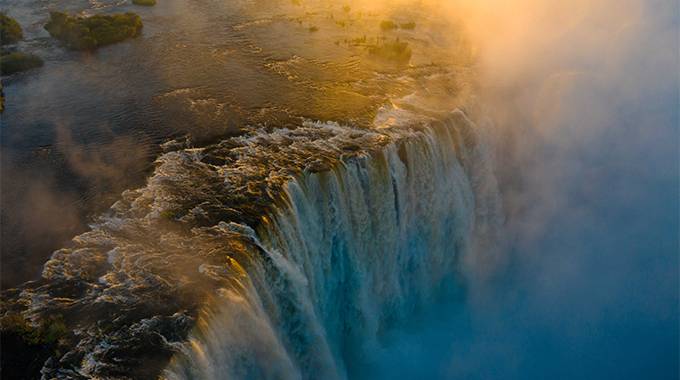
The Victoria Falls appears to be thoroughly enjoying its alone time, reaching its highest flows in a decade in a powerful display of breath-taking beauty and intensity, which ironically no one is there to witness.
The Victoria Falls rainforest is closed, as, like the rest of the world, Zimbabwe is in lockdown to protect against the coronavirus pandemic. However, when the time is right it will reopen and the Victoria Falls will still be magnificent.
Zambezi River Authority public relations and communications manager Elizabeth Karonga said the high water levels were due to a significant increase in both rainfall and run-off in the catchment area upstream of Victoria Falls during the current rainfall season.
Authority data shows four times more water is now flowing over the world’s largest waterfall than at this time last year – on April 20, 3,922 cubic metres per second was recorded compared to 1,007 cubic metres per second on April 20, 2019.
“The Zambezi River normally experiences two peaks or floods, which are more evident in the upper catchment area, upstream from Victoria Falls, and depending on their magnitude, their effects are translated downstream,” Karonga said.
The first wave of floodwaters was recorded at Victoria Falls on March 31, 2020, with a peak flow of 4,289 cubic metres per second, and the second reached the Victoria Falls on April 14, and water levels were, again, rising, Karonga said.
The flow at the Victoria Falls from the second flood is expected to peak by end of April at more than 4,300 cubic metres per second, she added.
The flows at the Victoria Falls have not been this high since 2010 when they were slightly higher; they were also higher in 2009 and 1978, but the highest flows ever recorded were in 1958 when the peak flow reached an incredible 9,436 cubic metres per second, she said. In coming weeks the rise inflows at the Victoria Falls will continue until the rainfall upstream subsides, leading to a reduction in the Zambezi River flows, and subsequently reduced flows at the Victoria Falls. The Falls are expected to peak at the end of May this year.
Ross Kennedy, chief executive of Zimbabwean hospitality group Africa Albida Tourism, said nature continued to show off her power and influence over our lives!
“At a time when the world is in trouble the Zambezi River and the Victoria Falls display immense beauty, rugged power and a glorious snub to the current negatives,” Kennedy said.
“It has been quite some time since anyone witnessed the majesty and intensity of this level of water flowing over the Victoria Falls, with the last period of such floods being ten years ago.
“What a sad and disappointing irony it is, that at this time that one of the Seven Natural Wonders of the World is at its absolute finest, the world is in lockdown and very few if any will get to witness or experience this iconic destination in all its splendour,” he added.
“But, of course, nature being what it is, Victoria Falls will flood again and will be there to impress, enthral and excite many millions of tourists in the decades ahead.”
Marianne Betts is Zimbabwean hospitality group Africa Albida Tourism’s public relations officer.
From soaring sand dunes to safari parks teeming with wildlife, Africa abounds with incredible landscapes awaiting you to discover. From a luxury train hotel set atop a bridge to a safari lodge dedicated to showcasing the talents of African artists, here are the most anticipated hotel openings in Africa you need to know
1. Xigera Safari Lodge, Botswana
Photo: Courtesy of Xigera Safari Lodge
Set to be one of Botswana’s most luxurious safari lodges, Xigera is the latest addition to Red Carnation Hotels, which owns The Twelve Apostles and Bushmans Kloof in South Africa, among other exceptional properties around the world. The concept behind Xigera is a new era of safari lodges, which blends bespoke safari experience with African design and fine art. Each of the 12 individually designed suites will float delicately above the water and showcase handmade crafts and artwork by talented African artists, elevating the guest experience with a “living gallery” in the African bush.
2. The St. Regis Almasa, Eygpt
Photo: Courtesy of The St. Regis Almasa
While all eyes are on the opening of the Grand Egyptian Museum in Cairo, there’s another up-coming-city that’s worth adding to your bucket list. Just outside of Cairo lies Almasa, the country’s new administrative capital which is set to welcome a St. Regis hotel this year. Previously occupied by Almasa Royal Place, which boasts a prime location adjacent to a 42,000-square-foot convention centre at the entrance of the city, the St. Regis Almasa is set to be the ideal host to the country’s largest events, conferences and summits.
3. Kruger Shalati, South Africa
Photo: Courtesy of Kruger Shalati
One of the most exciting new offerings at South Africa’s Kruger National Park, the Kruger Shalati is an Afrocentric luxury train stationed atop the historic Selati Bridge above the Sabie River. Designed to recreate the magic of arriving at the park by train as early explorers did nearly 100 years ago, the hotel pays tribute to this important part of Kruger’s history by transforming the train into 24 en-suite rooms in the carriages and seven in the Bridge House next to the train. Guests will have access to two game drives per day, fine dining and a pool deck perched on the bridge, offering a swimming experience with unique viewpoints over crocodile, hippos, buffalos and elephants roaming below.
4. Kwessi Dunes, Namibia
Photo: Courtesy of Kwessi Dune
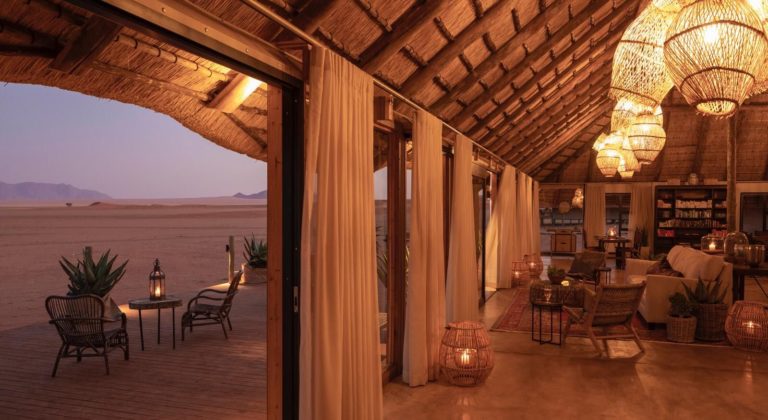
Experience the magic of the Namib Desert at Kwessi Dunes, a luxury camp located deep in Namibia’s striking NamibRand Nature Reserve, a vast desert wilderness of over 200,000 hectares. The camp will feature 12 air-conditioned canvas chalets, each with a separate “star gazer” room completely open to the sky as well as indoor and outdoor showers for maximum galaxy-gazing in the comfort of your private chalet. Activities in the reserve include scenic drives, quad biking, day trips to the dunes of Sossusvlei, hot air ballooning and more.
5. Royal Gorongosa, Mozambique
Photo: Courtesy of Royal Gorongosa
One of Africa’s greatest wildlife conservation projects to restore the ecological diversity of Gorongosa, Royal Gorongosa is the latest addition to The Royal Portfolio, the company behind Royal Malewane in Kruger National Park and The Silo in Cape Town. An exclusive tented camp situated in the eastern part of Gorongosa National Park, Royal Gorongosa has just six luxury tents and two two-bedroom Royal Suites, each comes with a vast deck with a private plunge pool and a gazebo. Apart from game drives, guests can enjoy activities unique to the region, such as canoeing on the Pungwe River, paying a visit to the coffee plantations on the slopes of Mount Gorongosa, engaging with local community projects and more.
Isibindi Africa Lodges (Isibindi Africa) is continuing with its community work through the Isibindi Foundation during the COVID-19 pandemic.
All the lodges – such as the Thonga Beach Lodge in the iSimangaliso Wetland Park and Tsowa Safari Island in Victoria Falls – are run as joint ventures with the communities and serve as the primary source of employment and income for these communities.
CEO of Isibindi Africa, Brett Gehren, said the main concern for the company was the residents of these rural communities who find it difficult to adhere to the regulations.
“It is very difficult for people to be confined to their homes in these communities, as they are often in need of food and supplies and live in very small homes,” said Gehren. “Hence, one has to understand that the socio-environmental conditions are certainly not lockdown friendly.”
The Isibindi Foundation is currently planning a strategy to procure and distribute resources – such as hand sanitizer, masks, thermometers and information pamphlets in isiZulu – to the various communities to assist with preventing the spread of the disease.
“Many people in these communities have compromised immune systems and the effects of the virus spreading could be disastrous, both health-wise and economically,” said Gehren.
At Tsowa Safari Island, Isibindi Africa’s conservation efforts in the Zambezi National Park are continuing during the pandemic and the company is in negotiations with a European funder, which will allow the Isibindi Foundation to significantly grow its anti-poaching programmes within the park.
“We are pursuing various avenues of funding to get as many resources as possible to assist the communities, including our staff,” said Gehren.
“The management and staff are doing their best during this time of crisis to minimise and mitigate the impact of the pandemic with courage and determination, and we’re confident that we will get through this storm together.”
Many small businesses are being forced to adapt and make critical changes just to survive. During these tough times, the world seems uncontrollable. That’s why it’s extremely crucial for us, small business owners, to focus on what we can control because that’s how we will survive and thrive during these unprecedented times.
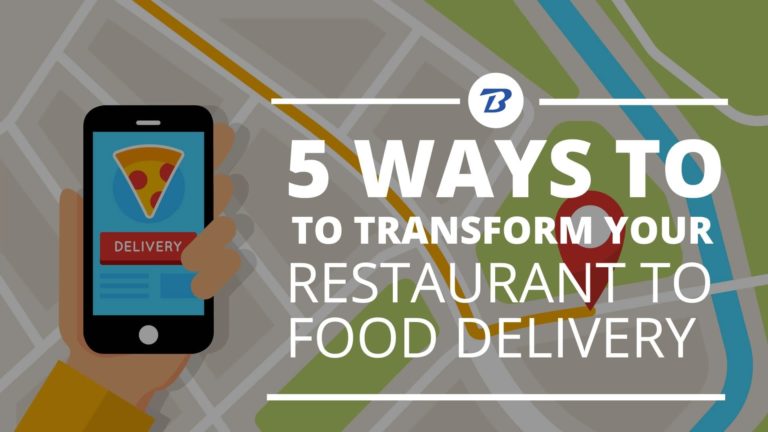
Here are 5 ways to transform your business, and the restaurant industry to food delivery, to get through the most uncertain period in modern times.
1. Embrace social
Your first job is getting the word out. You need to notify as many people as possible. Take advantage of all the available platforms in your community. Your Facebook, Twitter, Instagram, LinkedIn and YouTube pages can all help to generate word of mouth recommendations. But don’t stop there! Use WhatsApp Business, Create a catalogue to showcase your products and services.
2. Go Digital
In the modern world, business owners typically need to maintain both an online and offline presence to generate business. With technology penetration increasing by the day, more businesses have to adopt modern trends of running their businesses more effectively using software and applications. Registering and /or claiming your business with Byolife allows it to be found more easily on Google searches. A blog not only helps your company get its name out through followers but is a way to connect with your consumers more directly.
3. Vouchers
The hospitality industry is enduring a challenging year with the coronavirus plus shutdowns. For the restaurants and food outlets, there is a simple way you can earn more revenue without needing to fill dining tables. That solution? Start selling gift experience vouchers. You can drive sales during quiet periods and sell vouchers during busy times without impact on floor staff.
4. End-to-end hygiene
Pivoting to takeaway delivery will put an additional strain on your business hygiene systems and processes. Once you’re in the delivery business, hygiene no longer stops at the restaurant door, it extends right to the customer’s doorstep. Make it clear to anyone responsible for deliveries that frequent hand-washing and use of face masks are non-negotiable. Ensure your drivers are offering contactless delivery as standard and are observing the government’s social distancing rule.
5. Hands-free delivery
That means a customer places their order, and the restaurant brings it and leaves it in a designated spot for them to go out and retrieve. It eliminates any personal contact between the customer and the delivery person but allows them to still get their meal. Other food outlets are utilizing their drive-through service, you place your order, drive down to collect it. That way, you don’t encounter anyone.
That’s it, now go deliver!
It is difficult to predict what the future holds for the hospitality sector post-COVID-19. However, if your business seizes the opportunity and successfully implements a delivery service in the coming weeks it has the potential to act as a lucrative future revenue source. We’ll make sure to visit our local restaurants when COVID-19 is under control again.
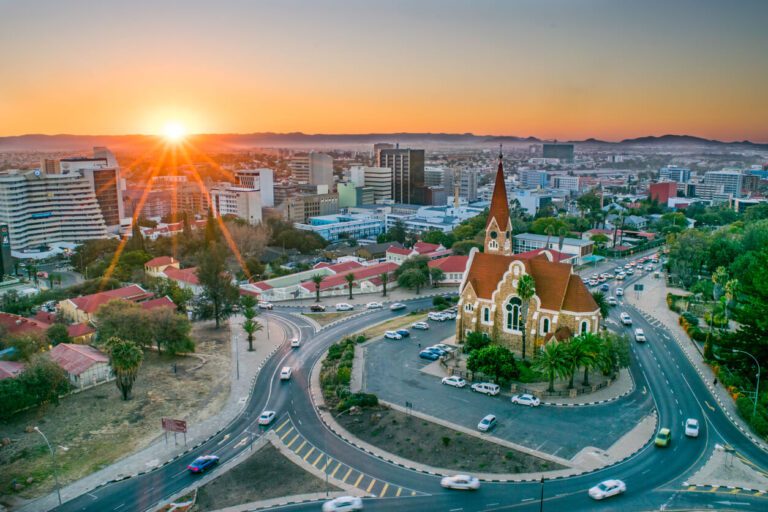
In a testament to German design and planning, Namibia’s capital city Windhoek lies almost exactly in the centre of its geography. It is indeed the administrative and economic heart of the country; nearly every national enterprise is headquartered here, as is the University of Namibia and all ministry head offices, major media and financial institutions.
Windhoek is a curious combination of cosmopolitan European flair and earthy African flavour. German architecture contrasts against a backdrop of mountain and desert, and travellers will find much to endear them to South Africa’s shyer neighbour.
Getting there and away
International travellers arriving in Namibia by plane will land via Hosea Kutako International Airport. South African Airways, LTU, and Air Namibia all have daily flights, whilst TAAG Angola Airlines has bi-weekly flights to Luanda. The airport is approximately 40km out of town, so cater for extra time for travel into the city centre. If you’re in need of a ride-share service similar to Uber, you can order a Lefa instead.
Windhoek also has a municipal airport, Eros. This is the main airport for all domestic flights – so travellers who need to make a connection between international and domestic flights should allow one hour for travel time between the two airports.
Getting around
There is no public transport system in Windhoek but there is a system of shared taxis, which run primarily between the townships and the main industrial/commercial areas of the city. Fares range from between NAD8 ($1) for destinations on route, to NAD16 ($2) for more out of the way areas. Otherwise, hire a private taxi or a Lefa.
Driving around Namibia is the best way to see the country. The roads are excellent, the traffic is light, and the signposts are numerous, clear and unambiguous. It’s easiest to hire a vehicle for the whole time spent in Namibia. There are a number of car rental agencies located at the airport.
Where to stay
The Olive Exclusive Boutique Hotel is set conveniently close to the Windhoek central business district, but is still far enough from city centre noise and traffic. The location suits the business community perfectly, as it does for tourists seeking a bit of luxury.
The Kalahari Sands Hotel and Casino is also located close to Windhoek’s business centre. It offers luxury four-star accommodation and has one of the best casinos in Namibia.
For more standard fare, try Protea Hotel Fürstenhof. Situated only five minutes’ walk from the city centre, this is an ideal base to start exploring the city.
Eating out
For a taste of fine Namibian cooking, try NICE (Namibian Institute of Culinary Education). As the name suggests, this is a chef school. There is a large range of meals to choose from with just as much creativity. Also try Luigi and the Fish, which has a huge menu of Namibian fare such as game, beef and pork.
For something more exotic, Italian lovers will delight in La Dolce Vita (in the Kaiserkrone Centre) or Sardinia on Independence Avenue. Both serve a variety of pizza and pasta dishes, and Sardinia is famed for its delicious ice cream. Tim Sum provides a more oriental vibe, serving a range of Taiwanese vegetarian food.
History and culture
Namibia was originally inhabited by nomadic hunters, gatherers, and livestock herders; the ancestors of today’s Bushman and Khoi-speaking people. European traders, missionaries, and settlers began arriving in the mid-1800s, and a German colony was established in 1890, but came to an end during World War I when South African troops occupied Windhoek. Namibia (as South West Africa) achieved its independence in 1990.
The city is filled with architectural dedications to Namibia’s German origins. Windhoek’s three beautiful castles, Heinitzburg, Sanderburg, and Schwerinsburg, were built during the colonial period and are each worth a visit.
In the city
For a full experience of Namibian heritage, The Bushman Art Museum and African Museum is indispensable. Located in the centre of Windhoek, it started as a souvenir and gift shop and soon became a private gallery. The National Art Gallery of Namibia houses permanent collections of Namibian, African and European art, and has a full programme of travelling exhibitions.
The National Botanical Gardens are also a must-see as they house Namibian plants exclusively. The gardens are also home to a variety of mammals, birds, reptiles and insects, and there are a number of self-guided walking trails lead through the gardens.
Out of the city
Out of Windhoek, Namibia offers some amazing sights. The Fish River Canyon is the second largest natural gorge in the world and the largest in Africa. It is an extremely popular hiking destination and offers amazing photo opportunities.
Sand meets sea along Namibia’s ominously-named Skeleton Coast. Stretching over the northern third of Namibia’s coastline, the name is well-earned given the scores of shipwrecks scattering the beaches – thanks to the Benguela Current, dense fog and rough surf.
The Kalahari Desert, while not technically a desert, offers vast expanses of breath-taking beauty. It is home to the San Bushmen.
Night life
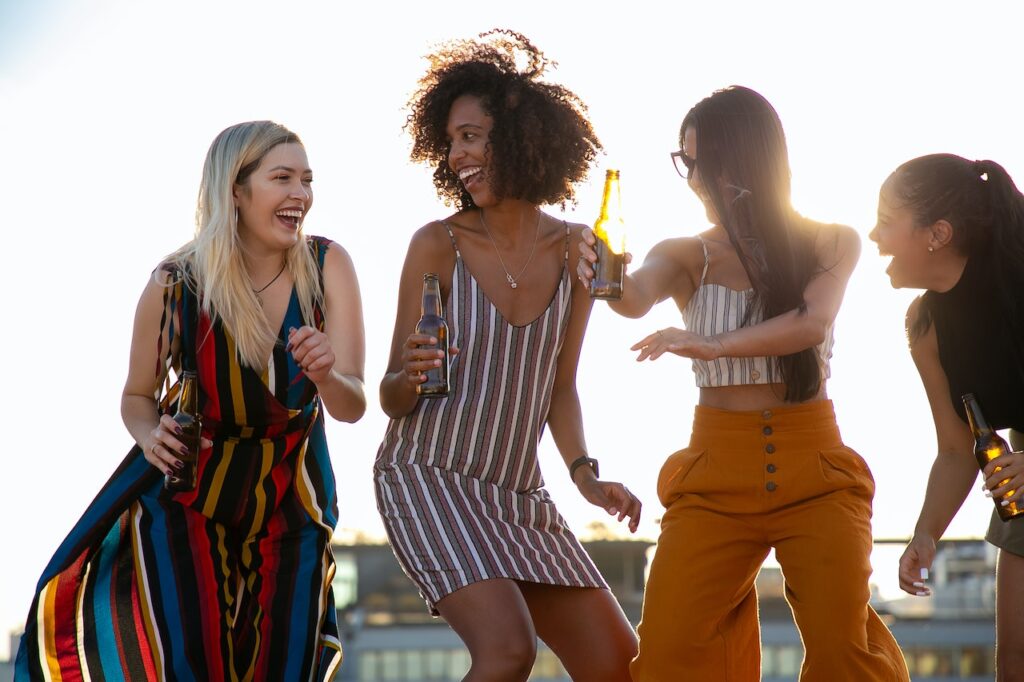
While most socialising in Windhoek takes place in private residences – Namibians are as fond of a braai just as much as the South Africans – there are plenty of places to join local revellers. Bar hopping can take you from the sophisticated chill of The Wine Bar to the more down-to-earth style of Joe’s Beerhouse.
There are also a number of music and dance venues catering to all tastes. El Cubano provides a Latin twist while African rhythms define Chez Ntamba. The rave crowd will flock to Bump, while rock music aficionados will find a home at Blitzkrieg Bunker Bar.
Shopping
The Post Street Mall is a pedestrianised shopping precinct with a variety of shops, cafes and restaurants. There you can also find the Windhoek and Namibian tourist board info centres, as well as a wide variety of expensive craft stalls. For cheaper deals, without skimping on the quality, try Okahandja; a short drive out of Windhoek.
For meat lovers, Windhoek is veritable smorgasbord of choice. At Readi Bites meat market, order anything from oryx and kudu to springbok or zebra.
Practical information
English is the official language of Namibia but about 50% of the population speaks Afrikaans. German is also used in tourism and business, while 50% of Namibians use Oshiwambo as a mother tongue. The country code for Namibia is 264.
To prevent the spread of coronavirus, people around the world are trading their handshakes, hugs, and hongi (a traditional noses-pressed Maori greeting) for lower-risk gestures such as foot bumps and air high-fives. The current COVID-19 crisis is influencing ways people connect, but for some cultures, no-contact greetings already exist and are the result of deeply rooted traditions rather than pandemic protocol.
Namaste from India to Nepal
The Sanskrit term translates to “bend or bow to you,” and so, Selvakumar says, “a person bows [the head] slightly when doing namaste to another person to signify ‘the Divine within me bows to the same Divine within you.’ It is considered to be a sign of respect and gratitude.”
Wai in Thailand
The standard greeting across Thailand, the wai, also involves a gentle bow of the head with one’s hands pressed together in front—evidence of the influence of Hinduism and Buddhism on Thai culture, past and present. The history of the wai also comes from the greeting to show that we are very open, we do not carry any kind of weapon, and we come in peace.
Bowing in Japan
The Japanese bow of today is not exactly the same as the one used then. White says it has “evolved into the modern bow, where people use this body language to greet each other.” And when you bow now, you can keep your feet planted on the ground. In the past, Japanese lived in homes where tatami mats were the norm and bows were made from a seated position.
Cup and clap in Zambia
Shaking hands is commonplace in Zambia. But you can also communicate without physical contact.
To say a simple hello, cup your hands together and clap a couple of times while saying “mulibwanji” (meaning “hello,” used any time of the day) or “mwakabwanji” (good morning).
If you’re meeting in-laws, you’ll need to take it a step further. While cupping your hands in the same way as the general hello, squat down low and clap in this position. Lowering your body while greeting conveys greater respect.
When you meet other elders, you can say hello by placing a hand on your chest and stomach and bending your legs slightly, almost in a curtsy.
Zambia is home to more than 70 ethnic groups, but these gestures are passed down through the generations and understood by all Zambians, from rural villagers to business people in cities.
Bulawayo, Zimbabwe’s second largest city, is the industrial heart of the country, but this shouldn’t deter visitors. The city is sedate and elegant, with wide, tree-lined boulevards and attractive colonial architecture. Also known as the City of Kings, it is a major transport hub, sitting on the Cape to Cairo trans-African highway and, as such, offers many attractions for the tourist and business traveller alike.
Getting there and away
Bulawayo is served by Joshua Mqabuko Nkomo International Airport, which recently underwent renovations. It is located about ten kilometres from the city and is serviced by Air Zimbabwe, SAS, South African Airways, South African Airlink and Iberia. There are flights into Bulawayo from all of South Africa’s major airports and daily flights from Harare. Getting into the city, you will need to hire a rental car (Avis and Europcar), take a taxi or hop on an airport shuttle. There are no buses or train services into the city but a taxi can be hired, and the 20 minute journey into town.
Getting around
It is fairly easy to get around Bulawayo on foot during the day, but taxis are advised during the evenings for safety’s sake. However, there are several pleasant areas in Bulawayo’s older areas that are worth wandering through. Driving is by far the easiest way to get around though so car hire is recommended, although road conditions have deteriorated over the past few years. Alternative options are to take the local taxis, which are light blue in colour, or to take your chances with the informal minibus taxi system (cheap and convenient, but crowded and in poor condition).
Where to stay
As one of the highest rated hotels, the Nesbitt Castle is a pricier option but the Victorian-style architecture and superb grounds make it well worth the stay. Friendly and efficient staff and a well-regarded restaurant make this the pick of the city. For more standard, business-friendly accommodation, you can’t go wrong with the Holiday Inn Bulawayo, especially if you’re on a tighter budget. Conveniently located near the CBD and industrial areas, it’s equipped with all the requisite business facilities. The Mpala Boutique Hotel is also a good bet for business travellers: convenience and reliability is the order of the day.
Eating out
As with many second cities, Bulawayo is laid back in style but there’s plenty to experience food-wise. At the Smokehouse, food is clearly viewed as an experience. Superb dishes with high quality presentation, served in a tranquil garden setting, offers the perfect lunch or dinner out. The Bulawayo Club, once a gentleman’s club, is now an interesting colonial throwback. A wood-panelled bar is a great drinking spot during the day and the open-air atrium is excellent for lunches. New Orleans restaurant offers reasonably priced meals, best enjoyed on the deck. The steaks are amazing.
Nightlife
Not known for its vibrant night scene, there are still places where you can enjoy the evening. The Terrace Bar, which has been a popular drinking spot for decades, has just completed renovations and is aiming to lure live bands and reintroduce live entertainment for its patrons. Zarah Lounge is an upmarket restaurant, bar in the heart of the city with a great atmosphere. Vist The Deck. The Vista right in the city has a swimming pool and rooftop terrace. If pubs are more your style, the City of Kings is full of them; try Cape to Cairo or Pub Lagondola for live music and Mosaics for all-night dancing.
In the city
You won’t lack for anything to do here; Bulawayo is home to a veritable treasure trove of museums and galleries. The Natural History Museum of Zimbabwe is a great place to start. It houses a fascinating geology section and has the distinction of possessing a dodo egg and one of the first ever caught coelacanths, as well as the second largest elephant display in the world. The Railway Museum houses many colonial relics including Cecil Rhodes’ personal train carriage; a great option for children and train fundis. The Khami Ruins (22km outside the city) are a UNESCO World Heritage Site and was once the capital of the Kingdom of Butua. Well worth the drive.
Shopping
There are plenty of modern shopping complexes in the city so all your basic needs are well catered for. At the Bulawayo Centre (in the centre of the CBD) or the Ascot shopping centre, you’ll find all the usual amenities including travel agent, news agent, clothing shops, etc. There are also several places in which to find local arts and crafts and curios: Induna Arts and Tendele Curio Shop are both good picks for local jewellery, textiles, carvings, paintings and artifacts, while Jairos Jiri Craftshop sells crafts made by disabled people, including great baskets.
Out of the city
Strategically located along the trans-continental highway, and with many historically important sites nearby, Bulawayo is a tourist mecca. It also benefits from being located close to several national parks. Matobo National Park is also a UNESCO Natural World Heritage Site and includes an Intensive Protection Zone breeding a large population of Black and White Rhinoceros. It’s situated in the Matobo Hills and the fascinating terrain is a hikers’ paradise. The Hwange National Park is the largest game reserve in Zimbabwe and is on the main road from Bulawayo to the Victoria Falls. It boasts a large variety of wildlife with one of the largest elephant populations in the world.
History and culture
Bulawayo is situated on some of the most ancient rock in the world, and the city itself is one of the oldest and most historically important in the country. The city was founded by the Ndebele king, Lobengula, in the 1870s. The name Bulawayo means “place of slaughter”, which refers to the conflict that occurred when Lobengula took the throne. In 1893, King Lobengula was forced to evacuate by British South Africa Company troops during the Matebele War. Colonial influences are present throughout the city. Today, the city is in a state of decline thanks to the ongoing economic crisis in Zimbabwe but is still rich in cultural history.
Health and safety
Bulawayo is renowned for its friendliness during the day but at night the city gets very quiet. Common sense applies here, as it does in any large metropolis. Use taxis at night and stay away from the more salubrious areas as muggings and theft do occur. While malaria is present throughout the year in the Zambezi Valley (including the Victoria Falls), the risk is negligible in Harare and Bulawayo. Take precautions if you do plan on leaving the city confines.