Friday, June 12, 2026
Home Blog Page 33

World’s View in Hwange?

0

Cecil John Rhodes, one of the most famous British colonisers, was buried in Matobo Hills in Matabeleland South and this was according to his burial wishes that his remains be interred in the granite-studded hill.

It is in one of the hills where he was eventually buried following his death in South Africa and the funeral procession had to endure several thousands of kilometres from Muizenberg in Cape Town, South Africa, by rail and wagon to Matopo
The place where Rhodes was buried is today popularly known as “The World’s View” due to splendid views accessibility of the entire Matobo environs and its surroundings, which are a marvel to watch.

CJR, as Rhodes was popularly known, died on March 26, 1902, at the age of 48. Please take note of the date and the province where he was buried. Yours truly tries to juxtapose a similar event, which took place in the same year on an equally equivalent hilltop, but in a separate province altogether.

This particular place can be a force to reckon within the country’s tourism industry if it is extensively packaged if we are to emulate what the powers-that-be are doing with Rhodes’ grave in the Matopos.

Hwange district is synonymous with being home to Zimbabwe’s huge coal reserves as well as a tourism destination of choice, especially for animal enthusiasts.

Hwange National Park is the country’s biggest game reserve and is home to the “Big Five”, namely lion, elephant, leopard, rhinoceros (poachers beware as parks rangers shoot to kill) and buffalo. To my fellow uninitiated, the district is situated in Matabeleland North province and it is home to the Nambya and Dombe, among other local tribes.

In the town of Hwange, there is a hill, which is known in some circles as Lonely Tomb Hill and surprisingly most residents in the coal mining town are not even aware of the existence of such a rather strange spectacle.

This particular nature’s wonder was given the name following the discovery of what is considered to be a marble and limestone tomb whose epitaph inscribed in capital letters is as follows: “In loving memory of Annie MacDonall who died at Wankies [sic]. The 22nd June 1902. Aged 26 years.

“Blessed are the dead who die in the Lord.”

Besides being the only (and lonely) grave on this particular hill, what boggles the mind is whoever carried the body of Annie MacDonall deserves some space in the book of records. The sole passage to the summit where the grave is located is quite steep and I simply deduced that not more than two individuals carried MacDonall’s remains to her purported resting place.

The place where the grave was dug is surprisingly flat and surrounded with some sort of sandy soils while most of the area is covered with rocks.

In most of my travelling and touring escapades to various places (including hills and mountains, of course) around the country, yours truly is yet to come across a hill or mountain whose summit is on a rather flat area.

I have never been to South Africa’s renowned Table Mountain, and I can safely say that with the powers vested upon me by none other than myself, Hwange’s Lonely Tomb Hill is the table hill of this particular province. It must, therefore, be accorded some form of heritage status and I call upon the local Nambya tribesmen to join me as we seek to promote such places.

As indicated earlier, the Lonely Tomb is located in an area that is more or less the same position as Rhodes’ grave in the other province where it is situated.

Once one reaches the hill’s pinnacle, most of Hwange town and its environs are laid bare as far as the eyes can see.

Unlike the Matobo Hills, this particular nature’s wonder is not for the faint-hearted, but only those who in the past could have endured climbing Mount Nyangani in the Eastern Highlands.

Unlike Mt Nyangani, this hill is not sacred, but is somehow strenuous and challenging to climb as there is only a single path to the summit where the mysterious tomb is located.

The hill is daunting to locals because it is heavily infested with black mambas and other dangerous snakes, hence, few people have ever dared to take the risk.

The legend about the lonely tomb is that Annie MacDonall used to spend most of her spare time on the hill admiring the coal mining town’s beauty in the then Wankie. It is said before her untimely death, she made a request that her remains be interred on top of the hill where she used at have some form of siesta.

The other unconfirmed report is that while the hill was her favourite pastime place, her remains were buried somewhere else and the tomb is just a mural.

While the lady (MHRIP) could not be as popular as CJR, if The Lonely Tomb is marketed and packaged properly, it could be a force to reckon in the province’s tourism drive. The same applies to the Nambya Cultural Museum that is just a stone’s throw away from the tomb.

I have a couple of foreign contacts who have expressed their willingness to come and “sample” the place once the world is done with the coronavirus (COVID-19) epidemic.

Talking of COVID-19, social spacing is of fundamental importance. Despite a few teething challenges, together we can overcome this global pandemic.

Prevention is better than cure and whoever coined this particular phrase deserves to be among the esteemed Nobel laureates. – The Standard

Rainbow Tourism Group to focus on expansion

0

LISTED hospitality and leisure group, Rainbow Tourism Group (RTG), says it will be directing its focus and resources towards hotels refurbishment and room expansion in the 2020 financial year.

The hotel group revealed this in its full-year final results to 31 December 2019.

In December last year, RTG embarked on a US$3 million refurbishment of its flagship hotel, the Rainbow Towers Hotel and Conference leading to a temporary closure of the hotel side as 183 guest rooms and suites were being renovated.

This also entailed the installation of two high-tech guest elevators to complement the modernisation programme.

As part of efforts to bolster its income, RTG also successfully established Heritage Expeditions a local tour operations and activities entity.

Heritage Expeditions has already established an adventure park at the Rainbow Towers Hotel in Harare, kick-starting various activities like city tours, quad bike safaris and white water rafting.

In a statement accompanying the 2019 full-year results to December RTG chairman  Arthur Manase said: “The company will continue to deploy its resources towards supporting its key strategic pillars which include: refurbishment of all the hotels to world standards, and rooms expansion in Victoria Falls hotel.

“…at the same time financing the growth of Heritage Expeditions Africa to become the premier tour operations company in Zimbabwe.”

Despite the turbulent times experienced in 2019, the hotelier saw revenue growth of 62 percent to $454,6 million from $279, 8 million in the relative period despite a 23 percent drop in occupancy levels from 61 percent.

RTG attributed the decline of 2019 occupancy levels to the group’s decision to shut Bulawayo Rainbow Hotel between January and February last year for renovations, shedding 4 percent in occupancy levels in the process.

Coupled with significant monetary policy changes, which saw the promulgation of Statutory Instrument 142 which ushered the use of Zimbabwe dollar as the sole legal tender for domestic transactions in the country.

RTG’s foreign business revenues modestly surged to close the period under review with a foreign business income of US$11,2 million translating to a 1 percent growth compared to US$11,1 million percent recorded in the prior comparable period, while the e-commerce channel earned the company US$2 million from US$1,8 million in 2018. – The Herald

Over 3,000 Have Registered for This Virtual Hospitality Summit

0

Digital conference will unite the hospitality industry to combat the COVID-19 crisis

Over 3,000 hospitality industry professionals have already registered and over 5,000 are expected to attend Hospitality Tomorrow, a free online summit, taking place tomorrow, 7th April, to discuss the impact of the COVID-19 crisis on the hospitality industry.

The event features an impressive array of speakers, all giving their time free of charge to participate. Highlights on the agenda include:

Dr Paul G. Stoltz, Founder and CEO of Peak Learning and author of Adversity Quotient, discusses how we survive and craft our response in this moment of truth. He is also interviewed by HARDtalk Presenter, Stephen Sackur

Roger Bootle Chairman, Capital Economics, assessing the economic impact of COVID-19

Amr AlMadani, CEO, Royal Commission for AlUla, and Puneet Chhatwal, CEO & MD, Indian Hotels Company Limited, considering how to sustain growth through adversity

A top team from HAMA Global, representing over a million hotel rooms, shared their experiences of the crisis from an asset management perspective

Hon. Minister Najib Balala, Cabinet Secretary, Ministry of Tourism & Wildlife, Kenya, and Roger Dow, President & CEO, U.S. Travel Association, exploring with Anita Mendiratta, Special Advisor to the Secretary-General, UNWTO, the creation of global coalitions readying for recovery

Olivier Jager, CEO & Co-Founder, ForwardKeys and Robin Rossmann, Managing Director, STR, talking to Nick van Marken, Managing Director, van Marken Limited, about spotting the green shoots of recovery

Andrew Sangster, Owner, Hotel Analyst, evaluating the post-virus investment landscape with Desmond Taljaard, Managing Director-Hotels, L&R, and Paul Slattery, Director, Otus & Co Ltd

Wolfgang Neumann, Former Radisson CEO, Chairman, International Tourism Partnership and Chairman, Hotelschool The Hague, discussing crisis communications with Peter Greenberg Travel Editor, CBS News, Arnie Weissmann, Editor in Chief, Travel Weekly, and David Tarsh, CEO, Tarsh Consulting.

In addition, there are breakout sessions featuring many more top executives, covering the prospects for adventure travel, crisis management tips from around the world, the post-corona age, hospitality’s role in community resilience and how to capitalise on the downtime.

Other popular conference activities will also be replicated online, including speed networking, which will give participants a series of three-minute one-on-one video calls with other delegates. There will also be an online exhibition, where it will be possible to browse through virtual exhibition booths and engage in a live video conversation with a representative of the exhibitor.

Jonathan Worsley, Chairman & Founder, Bench Events said: “In difficult times, people have a burning desire to come together to figure out how to address the situation. As that is not possible in person, in just a couple of weeks, we have created the opportunity in cyberspace. I am excited to see thousands of industry leaders from around the world signing up to attend.”

More information about the agenda, speakers and how to register can be found at HospitalityTomorrow.com. Registration is free of charge, although an optional charity donation is requested.

Zimbabwe gazettes laws to protect animals

0

Zimbabwe has promulgated new regulations to protect endangered animal species and curb illegal wildlife trade in animal and animal products.

The Government gazetted SI 72 of 2020 and SI 71 of 2020 recently as part of efforts to strengthen the Parks and Wild Life Act to deal with poaching and the illegal trafficking of endangered species that include pangolins, that has emerged as one of the most trafficked mammals in the country.

These regulations were cited as the Parks and Wild Life (Specially Protected Animals) regulations of 2020.

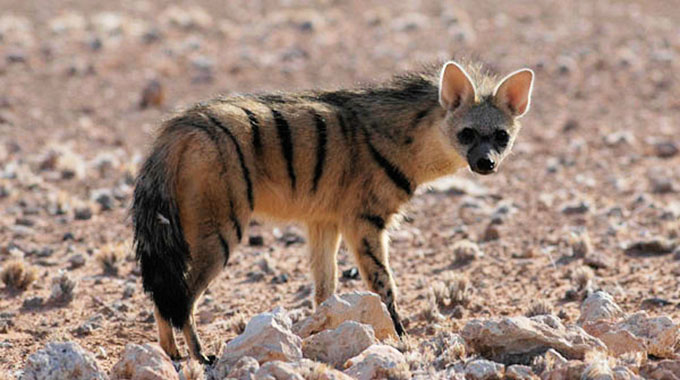
The list of the Specially Protected Animals includes the Aardwolf ( mbizimumwena in Shona or Inthuhu in Ndebele), bat-eared fox, cheetah, gemsbok, pangolin, rhinos, roan, wild or hunting dogs and the Lichtenstein’s Hartebeest (a rare type of antelope).

“These are part of new measures to protect our endangered animals which include pangolins, which are one of the most trafficked animals,” said Zimbabwe Parks and Wildlife Management Authority spokesperson Tinashe Farawo.

“The regulations seek to strengthen existing laws in the fight against poaching and the illegal trafficking of endangered animals.

“Pangolins are the most threatened and the laws are part of our new regulations to help prevent, detect and penalise wildlife crimes.”

According to the World Wildlife Fund (WWF), a leading organisation in wildlife conservation and endangered species, trade in the elusive pangolin mammals is now staggering with an estimated 1 million pangolins trafficked over the last decade.

The global animal agency reports that more than 195 000 pangolins were trafficked in 2019 alone.

Zimbabwe is moving to strengthen its legal frameworks to prevent and address the illegal harvest and trade of wildlife species.

Zimbabwe and most other African countries are facing an unprecedented spike in poaching and illegal wildlife trade, which is threatening to decimate the continent’s rich wildlife resource base.

Poaching is threatening the survival of elephants, rhinos, cheetahs, lions, hippos and a whole list of other animals still found on the continent.

Wildlife crime is now prevalent across Africa with a complex web of highly dangerous international networks.

Wildlife and animal parts are being trafficked to various parts of the world.

The poaching of elephants for ivory and other wild animals for their skins and bones has taken on new and deadly dimensions, with poachers using chemicals such as cyanide to poison wildlife.

Countless other species such as turtles, pangolins, snakes and other wild plants and animals are being caught or harvested from the wild and then sold to buyers who make food, pets, ornamental plants, leather, tourist ornaments and medicine.

Tusk Trust, a wildlife organisation, reports that 100 000 elephants were killed in the past few years, leaving a population of about 400 000 — half what it was more than two-and-half decades ago.

Rampant poaching in the sub-Saharan range has resulted in the deaths of 100 000 elephants from 2011 to 2013, according to the International Union for Conservation of Nature.

Tanzania’s elephant population plummeted by 60 percent to 43 330 in the five years ending in 2014, according to the Great Elephant Census, carried out by a coalition of wildlife groups, while Mozambique lost half its elephants in the same period, falling to 10 300.

Wildlife campaigners say the statistics “underscore the toxic mix of determined criminal gangs, corrupt Government officials and a strong market for smuggled ivory in Asia — particularly in China — which has deepened its economic ties to Africa in recent years.”

More than 300 elephants have been killed due to cyanide poisoning since 2013 as Zimbabwe continues to battle with the worrying scourge of poaching which is threatening the country’s wildlife heritage.

A total of 59 people have been arrested for poaching by the Zimbabwe Parks and Wildlife Authority (ZIMPARKS) as from January this year to date.

Of the 59, nine have since appeared in court and sentenced to 9 years in prison.

Cyanide poisoning is the deadliest tactic used by poachers who place salt laced with cyanide near wildlife watering holes.

The chemical kills the body’s cells by starving them of oxygen.

In mammals, the poison is most harmful to the heart and brain — organs that depend heavily on oxygen supplies.

Elephants die no more than 100m from where they drank poisoned water or used salt licks drenched in cyanide. – The Herald.co.zw

Leveraging on Zimbabwe’s hospitality

0

Zimbabwe is a beautiful country, not so much because it is home to one of the seven wonders of the world — the mighty Mosi-oa-Tunya (The Smoke that Thunders), known to the world as Victoria Falls, her wildlife heritage or stunning scenery, but her people.

Zimbabweans are compassionate and hospitable people who can go the whole nine yards in accommodating visitors.

There is so much the people of Zimbabwe can give, so much more than meets the eye, but there is one thing they cannot let go, for it is close to their hearts — their freedom; which Independence was begotten of blood, violence, lead, iron, limb and sweat in a protracted engagement in the trenches of struggle.

It is that journey they have embarked on to reclaim their heritage; that, no matter what happens, they cannot simply overlook, even in their hospitable way, for hospitality is guided by ethos.

As the philosopher Jacques Derrida affirms, unconditional hospitality as an ideal is impossible.

Hospitality is always informed by set conditions that clearly distinguish between the host and the guest, with the host reserving the right to stretch out his/her hand as can possibly be done, and withholding that which he/she considers non-shareable, even under duress.

Isn’t that what Independence means; the right for a people to collectively determine their destiny leveraging on their ancestral heritage — the land, and all that it encompasses; wildlife, water bodies, rivers, mountains, forests, minerals and on all that permanently grows on it?

With Zimbabwe’s 40th anniversary drawing close, it is only appropriate to reflect on how the nation-State, through the Ministry of Environment, Climate Change, Tourism and Hospitality Industry has been able to ward off human and natural vagaries trained at her, and create opportunities for citizens using their collective heritage.

Born in 2019, for purposes of synchronisation, the Ministry of Environment, Climate Change, Tourism and Hospitality Industry is headed by Honourable Nqobizitha Mangaliso Ndlovu with Mr Munesushe Munodawafa as the Permanent Secretary.

Mandate
The Ministry of Environment, Climate Change, Tourism and Hospitality Industry’s obligation is to promote best practices in environmental and natural resources management.

To fulfil this mandate, the ministry is inspired by the vision to become a leading regional player in sustainable and natural resources management for socio-economic development.

Functions
The ministry’s purposes are to plan, research and develop environmental and natural resources policies and legislation. The ministry is committed to the promotion of stakeholder and public participation in integrated programmes of environmental, forestry and wildlife management, as well as the adoption of suitable and proven natural resources management techniques and viable use of same on a sustainable basis.

Peeking into the colonial safari
Through colonial conquest, white Rhodesians took control of African resources, among them, wildlife. Close to a century, they held onto black people’s heritage basing their claims on mere pieces of paper dubiously called Title Deeds.

The philosophy of Title Deeds was informed by Eurocentric concepts of ownership, through which land can be sold, bought or owned.

Using the same concept to turn land into a commodity, Rhodies fenced off vast expanses of the indigenous people’s land into conservancies, thus, taking ownership of their wildlife, a crucial part of their heritage as well.

Divested of their birthright, blacks lost their right to hunt or view their wildlife. They could only do so at the risk of arrest. Hunting safaris were a domain of white Rhodesians, who owned conservancies and had the money to embark on expeditions into natural wildlife habitats.

Thus, settlers created a hunters’ paradise for themselves, with the word rancher being synonymous with whiteness.

With conservancies, hotels and safari operations under the ambit of white Rhodesians, and their proxies, black people were prodded out of the colonial enclosure, yet the wildlife was their heritage.

Organisations, like CITES (the Convention on International Trade in Endangered Species of Wild Fauna and Flora), play into colonial whim as they serve Western interests at the expense of Africans, who should be the ones calling the shots on how to run their conservancies.

For instance, Zimbabwe is sitting on US$600 million worth of ivory, which the country cannot sell due to stringent rules set by those who have long lost their own wildlife heritage.

Embarking on the African expedition
Zimbabwe is home to many tourist attractions, chief among them being the Victoria Falls, Lake Kariba, Chilojo Cliffs, Chinhoyi Caves, Nyanga Mountain, Great Zimbabwe; national parks, Gonarezhou, Matusadona, Mana Pools, Hwange, Nyanga, and Matobo, as well as national shrines like the National Heroes Acre in Harare.

The country has over 76 mammal and 650 bird species attracting over a million international and domestic visitors and boasts of three UNESCO World Heritage Sites.

At Independence in 1980, the Government of Zimbabwe was not only seized with correcting colonial imbalances in the tourism sector, but ascertaining that the country was attractive to investors and visitors alike.

To that end, legislation was enacted as the basis for the African expedition that would take indigenous people aboard, and grow the tourism sector without destroying the same heritage the journey was premised on.

Since Independence, the country’s tourism has experienced exponential growth.
According to the Zimbabwe Tourism Authority (ZTA) Tourism Trends & Statistics Report of 2018, between 1989 and 1999, tourist arrivals grew at an average rate of 17,5 percent while receipts increased at an average rate of 18 percent in US dollar terms and 25 percent in Zimbabwean dollar terms, annually.

The expansion in tourism was necessitated by the Government’s commitment to the sector. The establishment of ZTA through an Act of Parliament showed more than obligation on the part of the Government of Zimbabwe but expressed the seriousness with which citizens’ concerns were held since turning around the tourism sector would translate into economic growth with the common good being the ultimate winner.

Since then the ZTA has been effectively delivering on its mandate to Zimbabweans.
In 1986 the Harare Sheraton Hotel (now Rainbow Towers) was opened, thus giving an international flair to the tourism industry.

Independence opened up spaces for indigenous Zimbabweans in the tourism and hospitality sector. A new generation of tourism facilities, like lodges and hotels owned and managed by Zimbabweans, came into being across the country as more opportunities were created for citizens.

Whereas in colonial Rhodesia, the management and ownership of hotel facilities was a domain for whites, FREEDOM evened the playing field. Avenues were also opened in tour operations.

The Rainbow Tourism Group is such a pride of what it means to be Zimbabwean.

Investment opportunities were created in wildlife management following the post-2000 Fast Track Land Reform Programme which tilted the scales in favour of blacks, who were/are now able to invest in conservancies and hunting safaris. Examples in this category are Khanondo, Wenhau, Matetsi, Bubi and Dande.

In line with its obligation to citizens, in 2010, Zimbabwe established a fully-fledged Ministry of Tourism and Hospitality (now the Ministry of Environment, Climate Change, Tourism and Hospitality Industry).

In 2018, the Zimbabwe Council of Tourism (ZCT) formed in 1988 to give a voice to operators in the travel and tourism sector, changed its name to the Tourism Business Council of Zimbabwe (TBCSZ).

Zimbabwe Parks and Wildlife Management Authority manages five million hectares of land or 13 percent of Zimbabwe’s total land area. The Authority’s obligation is to manage the entire wildlife population of Zimbabwe, whether on private or communal lands.

The country’s wildlife-based tourism product is projected to be a US$5 billion industry by the end of 2020. The Department of Immigration came on board through its announcement of a new visa regime in 2018. The policy shift saw citizens from 28 countries being allowed to obtain visas upon arrival. As a result tourist arrival increased, particularly from India and Ethiopia.

Government’s efforts paid off as the sector has grown in leaps and bounds over the past 40 years. According to (ZTA) Tourism Trends & Statistics Report (2018), tourist arrivals into Zimbabwe reached 2 579 974 in 2018, up from the 2017 figure of 2 422 930, translating to a six percent growth.

The report reveals that the surge in tourist arrivals is estimated to have generated US$1,051 billion; a 15 percent gain on the US$918 million recorded in 2017.

Domestic tourism, as the report indicates, generated an estimated US$335 million during the same period, thus bringing overall tourism earnings in 2018 to US$1,386 billion.

Milestones: Environmental management
On the environment front, the Government of Zimbabwe made significant inroads since 1980. The Environmental Management Act (20:27) was enacted to provide for the management of natural resources and protection of the environment. The Act also provides for the prevention of pollution and environmental degradation.

Other laws passed to protect Zimbabwe’s natural resources are the Parks and Wildlife Act (20:14) and the Forestry Act (Chapter 19:05).

The establishment of the Environmental Management Agency (EMA), as provided for by the Environmental Management Act, as a fully-fledged authority in 2007, changed the landscape. In 2017 EMA banned the use of polystyrene material, commonly known as kaylite and related plastic packaging to curb health hazards and pollution.

In 2016, the Agency fined the Harare City Council $10 000 for polluting the environment and engaging in practices harmful to the health of residents. Harare was ordered to provide enough bins and waste containers as well as clear all its waste dumps.

To protect the environment, it is illegal to engage in construction activities in Zimbabwe without the environmental Agency’s approval.

Use of harmful pesticides was also outlawed.

Another milestone set pertaining to waste management, prevention of pollution and fostering a culture of cleanliness among citizens, is the on-going national clean-up campaign launched by President Mnangagwa in 2018.

Keeping pace with climate change
Like any other nation, Zimbabwe has not been spared by shifts in climate. However, the country has made strides in the fight by working towards establishing the National Climate Policy following finalisation of the draft National Climate Change Response Strategy.

The draft followed extensive public consultations to allow citizens to contribute to the process of developing a comprehensive action plan on aspects of climate change.

The process of developing the National Climate Change Response Strategy started in 2012 with the Institute of Environmental Studies at the University of Zimbabwe leading.

To get input on how best the country could come up with comprehensive and strategic approaches to climate change adaptation, mitigation, appropriate technology, public awareness and financing, consultative workshops were held countrywide.

There is, indeed, so much to celebrate as the Motherland turns 40 on April 18, 2020. – The Herald


Death of Thomas Cook presents a chance for Africa to cash in

0

Key events this week, all somehow linked to trade relations, must remind Africa about the opportunities it could be toying with and how easy it is to destroy value.

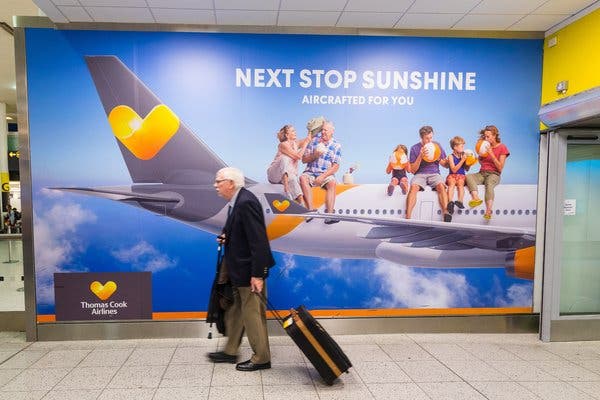
First was the demise of Thomas Cook, a company which traces its origin to 1841, leaving scores of travellers stranded. The second one was trouble at 10 Downing Street, ruffling Boris Johnson’s hair even more over that perennial British pastime, Brexit. The third was the ongoing border tiff between west Africa’s David and Goliath: Benin and Nigeria.

All these events are made relevant and interlinked by the latest fad: the African Continental Free Trade Agreement (AfCFTA). Ratified in July, AfCFTA is not a fad, but given Africa’s history of great policies and poor implementation, it might as well be.

When it came into effect, one thing was clear: there would be a single African market of more than 1.2 billion people to which African countries would be able to sell their wares without needless barriers. Every intra-country indicator is pointing upwards, meaning that if African countries could unearth immeasurable trade and investment revenue by doing business with each other.

Travel and tourism contributed 8.5% of Africa’s gross domestic product in 2018, equivalent to $194.2 billion (R2.9 trillion), according to the 2019 Jumia Hospitality Report. This places Africa second only to Asia in the high growth stakes of world tourism trends; expanding 5.6% against the global average of 3.9%.

The tragedy of an iconic company like Thomas Cook folding is but the flip-side of the powerful lesson for all of us, especially Africans. Nothing is too big to fail.

Africa’s most successful airline is owned by a government. Ethiopian Airlines anchors its growth trajectory on Africa’s largest airport, Bole International in Addis Ababa. It is the interconnectedness of the world, not isolation that holds the key to success in the new order.

Every disaster akin to the death of Thomas Cook presents to us a chance to cash in. Where one airline fails, another can assert itself. RwandAir has demonstrated its ability to open routes where its bigger and older competitors are failing or not looking. This is not going to work, however, if border disputes become commonplace.

Nigeria has no business wrestling a minnow-like Benin or any of its neighbours. Smuggling or no smuggling from Benin, it is focusing on the wrong problem. Despite rising local production, 8.9 million tonnes of rice between 2013 and 2017, demand still exceeds supply. It can plug this gap by increasing local production even more or finding progressive ways to facilitate legal imports. Closing borders is a no-no.

Recently, Rwanda and Uganda had a tiff over threats to internal stability to the point of blocking some border gates between them. Each country has a case, but the small window to increase intra-Africa trade and collaboration will close soon unless they learn to work together.

World trade and investment are floundering, thanks to the likes of US-China trade wars. This gives Africa a shot at redemption, provided it acts strategically, decisively and quickly. Nothing, including this golden opportunity, lasts forever. Africa can grab it or leave money on the table for non-Africans, yet again. – IOL

* Kgomoeswana is an author of Africa is Open for Business; media commentator and public speaker on African business affairs.

** The views expressed here are not necessarily our views

Three new safari camps open in Zimbabwe

0

Gonarezhou Conservation Trust (GCT) has opened three new solar-powered camps in Gonarezhou National Park (GRN), located in Zimbabwe’s Masvingo province: Masasani Mananga, Makonde Mananga and Mathuli Mananga.

The GCT is a new model for protected area management drawn up between the Zimbabwe Parks and Wildlife Management Authority and the Frankfurt Zoological Society and is directly responsible for the management of Gonarezhou for a period of 20 years.

Each of the camps has a central kitchen or dining or boma area as well as four-bedroom units that each accommodates two adults, either in a king-size or twin split bed configuration.

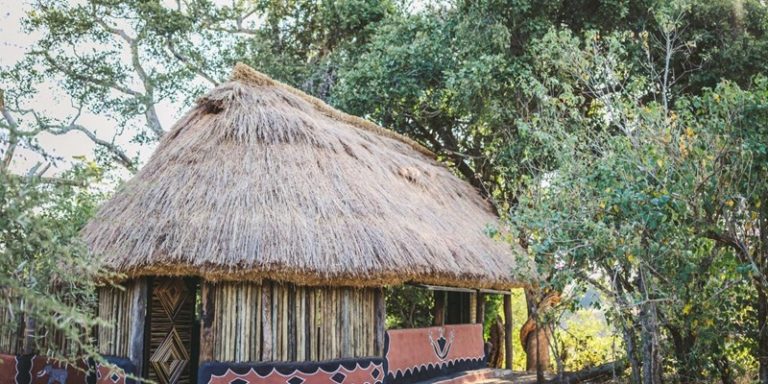
GCT Business Development Manager, Simon Capon says the camp structures are built using traditional techniques of mud-brick walls, natural floors and are decorated with natural paints, all made by women from the surrounding community. The thatching grass is also purchased from a disadvantaged women’s group who harvest the grass inside of the park.

Gonarezhou is part of the Great Limpopo Transfrontier Park (GLTP), which also includes South Africa’s Kruger National Park and Mozambique’s Gaza National Park. GLTP is home to more than 500 species of birds, 147 species of mammals, at least 116 species of reptiles, 34 species of frogs and 49 species of fish. – Tourism Update

Africa’s tourism industry is now the second fastest growing in the world

0

Some 67 million tourists visited Africa in 2018, representing a rise of 7% from a year earlier, making Africa the second-fastest-growing region when it comes to tourism, after the Asia Pacific.

African countries are now reaping the benefits from positive policy changes coupled with increased investments in the sector, that have made it a more attractive destination for tourists.

In Ethiopia, for example, relaxing visa restrictions while improving flight connectivity has seen Addis transformed into a regional transport hub, even overtaking Dubai as the world’s gateway to Africa. This has resulted in Ethiopia becoming Africa’s fastest-growing travel country, growing by 48.6% in 2018, according to  Jumia Africa Hospitality report,

Business visitors numbers, in particular, have received a boost from business-enabling reforms from some governments that have seen the potential in diversifying the sector. Kenya, Rwanda and South Africa have undertaken initiatives to position themselves as locations for conferences and exhibitions.

Top African countries for Travel & Tourism (WEF Competitiveness Index 2019)
Country Score Score
Mauritius 4.0 4.0
South Africa 4.0 4.0
Seychelles 3.9 3.9
Morocco 3.9 3.9
Namibia 3.7 3.7
Kenya 3.6 3.6
Tunisia 3.6 3.6
Cape Verde 3.6 3.6
Botswana 3.5 3.5
Tanzania 3.4 3.4

Such reforms have sparked investments in hotels, and business expenditures now account for 29% of tourism spending while leisure spending accounts for 71% showing the growth potential of tapping into “bleisure” travelers. This is an emerging group in the tourism market – those primarily travelling for business, but staying on for leisure.

Least restrictive destinations for visitors in Africa 2018 – UNWTO
Country Visa openness score
Mauritius 84.6
Benin 74.9
Rwanda 71.8
Guinea-Bissau 71.5
Togo 71.4
Cape Verde 71.3
Uganda 71.1
Mozambique 70.8
Seychelles 70.6
Mauritania 70.4

In absolute figures, the continent’s share of the global tourism pie remains small. While accounting for 8.5% of GDP and employing 24.3 million people on the continent, only 5% of international tourist arrivals were to African countries. Additionally, in 2018, only 1% of the  $1.7 trillion earnings in the sector were on the continent.

There is room for optimism as there are already quite a few changes and initiatives underway that could see continued growth in 2020 figures. Such changes include “Year of Return” style campaigns to attract black diaspora from the Americas, the easing of visa restrictions by some countries particularly for Chinese visitors and other Africans, the increased flight connections regionally and globally and the meteoric growth of Airbnb listings on the continent etc.

Jumia is optimistic about the impact of the implementation of the African Continental Free Trade Area (AfCFTA) which came into effect at the end of May. “It will definitely increase intra-regional business, and thus yield huge economic benefits to the continent,” says Estelle Verdier head of Jumia Travel. – Quartz Africa

Zimbabwe, Botswana and SA LandRover tour attracts 70 world tourists

0

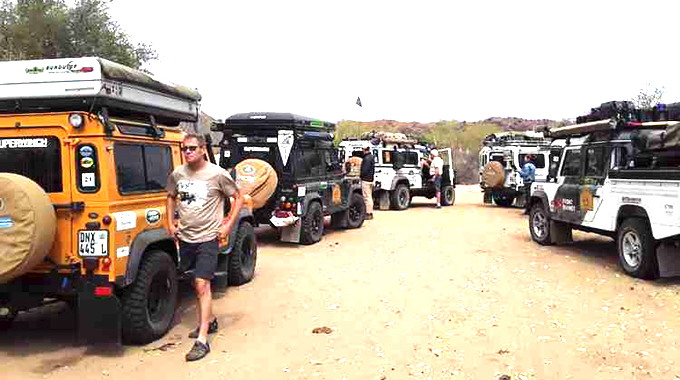
A total of 70 tourists from across the globe, arrived in the country yesterday through South Africa via a temporary crossing point along the Limpopo River to take part in the inaugural Defender challenge in the Greater Mapungubwe Transfrontier Conservation Area (GMTFCA).

The Mega-Park is made up of national parks from Botswana, South Africa and Zimbabwe. During the tour, the visitors from the United Kingdom, Netherlands, Mexico, Ireland and South Africa will leave for Botswana through Mlambaphele Border Post.

During the tour, they will experience wildlife and human settlements among other attractions in the tri-nations.

“We are happy with the reception and facilitation by Zimbabwean authorities. Generally, we are a bunch of Landrover enthusiasts from different countries and each year we have tours appreciating nature in parks across South Africa,” said the event director Mr John Kriek.

“During our last tour which ended in Mapungubwe National Park — South Africa, we were approached by authorities from the three countries to explore a 4 by 4 route.

“We are happy with what we have seen so far. Among the tourists are business executives from overseas and media teams from the leading Landrover magazines.

“This area has a lot of rich history and wildlife which need to be fully exploited to realise its potential for the growth of the three nation’s economies”.

He continued: “We have 31 vehicles and it’s the biggest group which we have heard since we started the tours.

Each person (mostly family) drives their own vehicle. The morale is very high considering that we will be passing through tourism borders among the three countries. As you are aware, accessing this place through the formal border posts is cumbersome”.

He said next year they will hold another event at the Greater Limpopo Transfrontier Conservation Area which includes, South Africa, Mozambique and Gonarezhou around the Gonarezhou National Park.

Mr Kriek said they will continue working on a number of products to market Zimbabwe’s Southern Transfrontier conservation areas.

“We are looking at introducing more camping tours and photographic safaris mostly around the Tuli Circle,” he said.

Zimbabwe National Parks spokesperson, Mr Tinashe Farawo, said the event will strengthen the country’s natural resources and active community participation in sustainable development initiatives.

He said the defender tour among other initiatives would go a long way in marketing the Greater Mapungubwe TFCA as a tourism destination of choice.

“Besides promoting human and wildlife management’s issues, such tours create employment for communities within the TFCA in terms of providing ancillary services,” said Mr Farawo.

Zimbabwe Tourism Authority’s (ZTA) Regional Manager — Beitbridge Ms Bertha Mutowembwa, said tourism will continue exploring new products within the TFCA besides waiting for annual events.

“This area is becoming popular with tourists from the region and overs seas markets. Together with other line stakeholders will continue marketing and introducing new products to boost both domestic and international arrivals,” she said.

The Mega Park also plays host to the annual Wildrun (which attracts 100 tourists) and the Tour De Tuli (which attracts 500 visitors).

Namibia introduces visas on arrival

0

Tourists from 47 countries no longer have to apply for visas in advance before leaving their countries for tourism, visiting, or transiting through Namibia.

This was announced yesterday by home affairs minister Frans Kapofi at the launch of the ‘Visa on Arrival’ pilot project held at Hosea Kutako International Airport (HKIA).

This project aims to improve Namibia’s global competitive ratings and progress towards liberalising Namibia’s visa policy framework for all Africans.

Kapofi said the project further aims to improve Namibia’s diplomatic representation and network across the world.

“Our ministry will continue to deploy smarter approaches to support tourism and economic growth while maintaining the integrity and security of our country,” he added.

According to the Travel and Tourism Competitiveness Index 2019 report by the World Economic Forum, Namibia ranks 81st out of 140 countries. An index used for the rating shows the country’s international openness and tourism facilitation.

Namibia is also ranked 38th out of 55 African countries on the 2018 African Visa Openness Index, which measures how open African countries are when it comes to issuing visas by looking at what they ask from citizens of other African countries when they travel.

Kapofi said 47 countries, 27 of which are African, have been selected for the visa on arrival project.

“Namibia exempted over 60 countries from visa requirements when their citizens visit Namibia for tourism purposes. This time, 47 countries have been selected for visas on arrival,” he noted.

Kapofi said visas on arrival will benefit bona fide tourists (excluding tour guides), potential investors coming to explore business opportunities, visitors coming to attend meetings, seminars, workshops (excluding those coming to perform pay related jobs), friendships and family-related as well as medical-related visits.

He clarified that people who wish to come to Namibia from the approved countries for employment purposes will still need to apply and acquire employment permits in advance. Applicants will be required to pay N$1 080 on the approval of the visa application.

Kapofi said the launch at HKIA was the first phase of the project, and the ministry intends to expand the project to seven more entry points around the country by the first quarter of next year.

Speaking at the same event, home affairs executive director Etienne Maritz stated that the ministry is taking steps towards improving the experience for tourists to Namibia, and achieving the country’s development aspirations.

“Through this project, we are confident the piloting of the issuing of tourist and visitors visa upon arrival project will support the seamless service we envision as a country for visitors and tourists entering Namibia,” said Martiz.

“We are confident that through our collective efforts, our stakeholders will contribute to our common objective of enhancing economic growth,” he continued.