Thursday, June 11, 2026
Home Blog Page 9

Qatar Airways introduces new menu for South African routes

0

Qatar Airways is celebrating its 20-year anniversary of flying to South Africa with an exciting new menu that showcases the rich culinary heritage of the African continent. Passengers travelling on routes between Doha and South African cities will soon be treated to beloved local dishes including braised lamb potjie, Durban’s famous bunny-chow, and traditional bobotie served with raisin rice.

The airline’s catering team has reimagined these classics whilst maintaining their authentic flavours, even introducing innovative dishes like biltong beef soup. On the Lagos-Doha route, travellers can already enjoy West African favourites such as jollof rice with slow-cooked beef and cassava.

The airline’s commitment to African cuisine goes beyond just serving traditional dishes, as explained by Senior Vice President of Product Development, Ms. Xia Cai. Working closely with local chefs and considering the unique challenges of in-flight dining, Qatar Airways aims to promote African flavours globally whilst maintaining authenticity and innovation.

The initiative also extends to supporting South Africa’s renowned wine industry, with carefully selected wines from world-leading local wineries featuring in their service. This culinary programme demonstrates Qatar Airways’ dedication to sustainable sourcing and celebrating regional specialities, whilst ensuring their dishes taste as exceptional at 40,000 feet as they would on the ground.

The top 10 busiest international flight routes from Africa in 2024

0

Even though Africa represents a small portion of the global air market, it’s a vital link connecting regions like Europe, the Middle East, and Asia. According to OAG Aviation’s Busiest Flight Routes Report 2024, Africa’s major international air routes are dominated by connections between North Africa and the Middle East, with Cairo-Jeddah leading at 5.4 million scheduled seats, followed by Cairo-Riyadh with 3.1 million seats.

The report defines “busiest routes” as those with the most airline seats available in both directions, with data compiled from OAG’s monthly reports throughout the year.

Major airlines including Ethiopian Airlines, Emirates, EgyptAir and South African Airways are driving connectivity, whilst European routes also feature prominently, with two Paris connections from Algiers appearing in the top 10. Despite challenges such as fuel costs and regulatory hurdles, the sector continues to develop, supported by growing trade and tourism demands.

Zambia Increases Trade Marketing Budgets to Boost Visibility in Key Markets

0

Zambia Tourism Agency is increasing its trade marketing budgets, with Chief Executive Matongo Matamwandi confirming that the Agency will focus predominantly on key source markets including the UK, Europe, and the US, which will receive 70% of the total funding.

The strategy includes plans to sponsor both Premier League and Spanish LaLiga clubs, alongside increased trade engagement and the appointment of tourism ambassadors in key markets, following research that revealed gaps in consumer awareness about Zambia’s attractions, including its connection to Victoria Falls and its status as home to the world’s largest hippo population (45,000) and the spectacular Kasanka Bat Migration.

The country’s tourism expansion is further supported by new luxury accommodation developments, including the Anantara Kafue River Tented Camp, Kutandala Camp, and the reopening of the historic Chichele Presidential Lodge.

Matamwandi emphasised that Zambia’s unique selling points, including its natural wildlife habitats, peaceful political climate and inherent hospitality, position the country as a premium safari destination.

African Nations account for nearly 60% of global airline blocked funds, IATA Reports

0

African countries now hold approximately $1 billion in blocked airline funds, representing 59% of the global total of $1.7 billion, according to the latest International Air Transport Association (IATA) report.

The situation is particularly acute in Central and West Africa. The XAF Zone, which includes Cameroon, Central African Republic, Chad, Republic of the Congo, Equatorial Guinea, and Gabon, has seen blocked funds rise by $84 million to reach $235 million.

The West African XOF Zone, comprising Benin, Burkina Faso, Ivory Coast, Guinea-Bissau, Mali, Niger, Senegal, and Togo, has reported $73 million in blocked funds.

Mozambique has seen its blocked funds rise by $84 million to reach $127 million, while in Eritrea, airlines face holding periods of up to 96 months for their funds.

IATA Director General Willie Walsh has emphasised that these restrictions pose risks to both airlines and the broader economic landscape, affecting travel, trade, and tourism.

IATA sees increase in global passenger demand in Africa

0

Global air passenger demand in October remained strong, the International Air Transport Association (IATA) has reported. (IATA is the representative body for the global airline industry.) Total demand that month rose 7.1%, year-on-year (y-o-y), while international demand was up by 9.5%, and domestic demand increased by 3.5%.

IATA also stated that although Europe had the highest load factors, African airlines capacity was up to 5.3 per cent year-on-year and load factor rose to 73.2 per cent.

In its released data for October 2024, the air transport association said total demand, measured in revenue passenger kilometers, was up 7.1 per cent compared to October 2023.

The data stated: “Total capacity, measured in available seat kilometers, was up 6.1 per cent year-on-year. The October load factor was 83.9 per cent .

“International demand rose 9.5% compared to October 2023. Capacity was up 8.6 per cent year-on-year and the load factor rose to 83.5 per cent.

“Domestic demand rose 3.5 per cent compared to October 2023. Capacity was up 2.0 per cent year-on-year and the load factor was 84.5 per cent.”

Commenting on the development, IATA’s Director General, Willie Walsh, said: “Continued strong and stable demand is good news, but just as important is the steady improvement in load factors. It shows what a great job the industry is doing in flying people more efficiently.

“Average seat factors have risen from around 67 per cent in the 1990’s to over 83 per cent today. Politicians thinking of trying to tax passengers off planes to reduce emissions would do well to note this. Even if fewer people fly because taxes make it too expensive, it doesn’t automatically mean reduced emissions because the planes will still fly, just with fewer passengers. That would reverse decades of hard won progress. We need to see the planes full to generate the economic and social benefits of travel with the most minimal emissions possible.”

Luxury Safari Brand Expands to Botswana

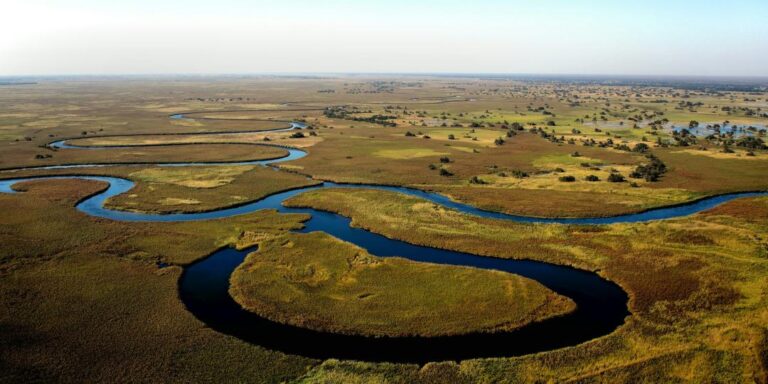
Singita has announced plans to open its first Botswana property in the Okavango Delta.

Singita Elela is set to open in July 2026 and will offer travellers exclusive year-round access to a 170 000-hectare concession.

“As our presence in Africa gradually and naturally grows, we are privileged to be expanding into Botswana’s Okavango Delta. Singita Elela will embody the Delta’s fluidity in all ways. Adapting as nature itself does, we are moving our design and guest experience forward in honour of this new region and its ever-evolving landscape,” Singita said in an announcement.

Specific details regarding booking rates, design or room configuration have yet to be released, but the luxury lodge group hinted at a flowing design in line with the new property’s name.  

“Elela – meaning ‘to flow’ in Setswana – will be designed to celebrate the Delta’s essence of eternal cycles and continuity. A new lodge concept will echo this with an ease embedded into the design and experience it offers, which will place the spirit of this wonder-filled oasis at its centre.”

More details on the lodge will be announced in due course. 

Singita currently operates lodges in South Africa, Zimbabwe, Tanzania and Rwanda.

African Travellers Still Rely on Agents, IATA Finds

0

African passengers are more likely to book flights with travel agents compared with travellers from other regions, IATA revealed at its media briefing for its 2024 Global Passenger Survey at the end of October.

According to the survey, 71% of global respondents said they booked airfares online, with 53% preferring to use the airline’s website or mobile application, while only 16% preferred making a booking via human interaction. However, of those, according to the survey, more passengers in Africa booked their tickets through travel agents than in any other areas.

Complicated itineraries

Industry experts explain that Africa’s reliance on travel agents could be in part due to the complexity of outbound flight itineraries, which often involve navigating multiple carriers, stops and time zones.

Bonnie Smith, GM of Corporate Traveller, adds that the continent’s Internet access is largely mobile-based with varying degrees of IT literacy.

“Most people browse the Internet on their mobile phones, which isn’t always ideal for comparing flights and making bookings. Imagine trying to open multiple tabs to check different dates and routes on a small screen. Travel agents make this process much simpler,” says Ramon Geldenhuys, CEO of 360 Degrees Travel.

Tricky visa requirements

African passport holders face even more challenges when travelling due to the extensive list of countries that require visas and often complicated application processes.

“Travel agents often have partnerships with visa specialists or stay updated on the latest requirements, helping travellers ensure they have the necessary documentation before they set out,” says Smith.

Experts point out that it becomes even more complex when African travellers plan to visit several countries and need visas for multiple destinations. “Instead of figuring out different visa requirements themselves, their travel agent can handle everything. They’re basically turning what could be quite a stressful experience into something much more manageable, letting travellers focus on looking forward to their trip instead of worrying about paperwork,” says Geldenhuys.

Travel agents offer additional support

Stefan van der Merwe, incoming CEO of Sure Travel, explains that, although there are exceptions, on average there is a smaller percentage of frequent African travellers.

“If you look at developed markets like Western Europe and the US, they have a much higher quantity of experienced frequent travellers and a percentage of them would be prone to booking online for destinations they have visited before,” explains Van der Merwe.

Additionally, Geldenhuys says demand for travel agents is compounded because less experienced travellers fear the risk of falling victim to the growing number of sophisticated online travel scams.

“Many people feel more secure booking through a trusted agent rather than risking putting their payment details online,” says Geldenhuys.

Less experienced travellers also appreciate the guidance, support, and assistance offered by agents, especially during disruptions.

Unforeseen circumstances such as delays, cancellations and unpredictable weather events affecting a flight itinerary are not exclusive to intra-Africa travel, but travellers also tend towards travel agents because they will receive better assistance in these situations, explains Van der Merwe.

“A travel agent is much better placed to be able to find an alternative flight or solve other crises compared to bookings made via direct or online channels,” he adds.

RTG reaches deal to buy Montclair Hotel for US$5 million

HOSPITALITY group, Rainbow Tourism Group Limited (RTG) has entered into an agreement to acquire Montclair Hotel and Casino in Nyanga for US$5 million, which would see it establishing its footprint in the Eastern Highlands.

In its half year financial report for the period ended June 30, 2024, RTG revealed that its strategic focus will be on protecting and enhancing profit margins.

This will be done through diligent cost management and the adoption of innovative business models. Currently, the group has properties in Kadoma, Bulawayo, Victoria Falls and Harare.

“The Board of Directors of Rainbow Tourism Group Limited wishes to advise shareholders and the investing public that the company has signed a sale and purchase agreement for the acquisition of the entire issued ordinary shares of Briolette Services (Private) Limited trading as Montclair Hotel and Casino (the transaction), for a purchase consideration of US$5 million,” RTG said in a statement on Monday.

“The conclusion of the transaction is subject to fulfilment of various conditions precedent. The company is now engaged in the necessary processes to finalise and execute the sale and purchase agreement, including satisfying all conditions precedent.”

Briolette Services (Private) Limited (Briolette), a consortium of indigenous businessmen, bought the Montclair Hotel and Casino Private Limited in 1997 and has been running it ever since.

Rainbow revealed that if the deal is successfully concluded, the transaction could affect its listed securities valued at US$64,03 million as of last Friday.

“Therefore, shareholders are advised to exercise caution and to consult their professional advisors when dealing in the company’s securities,” Rainbow said.

As of June, Rainbow’s total assets were US$54,88 million.

“The Montclair was built as a getaway resort for families in the capital and the surrounding farming communities in 1949 by Mr. J.R.A Smith. He named the completed sixty-four bed-roomed house Dannakay catering lodge after his two daughters Danna and Kay,” reads the Montclair Hotel and Casino About page on its website.

“The Dannakay was later renamed the Nyanga Mountain Hotel. In the early 1960s the hotel was renamed Montclair Mountains Hotel. During the year 1970 Mr. and Mrs. Lound bought the hotel and called it Montclair Hotel. This duo did not operate for long before selling the establishment to Lonrho who changed the hotel to Montclair after Mr. Lound‘s faithful dog.”

During the years 1980 to 1987, the number of rooms grew from 64 to 85, while staff cottages were built in the same period.

“Owing to the strong financial background of Rennies Granken’s Montclair developed along different facets during this time, the Casino was built, a state-of-the-art sewerage disposal system was built, the group also constructed the beverages cellar, extended the maintenance workshop and furthermore it increased the storeroom area.”

In 1987, the Zimbabwe Sun Hotels took over the management of the hotel and renamed it Montclair Casino Hotel.

“The service provision from the casino was exceptional, and this resulted in the hotel gaining an additional star to its rating from three to four stars.”

That was when Briolette bought the facility.

Africa has the greatest unused potential for aviation growth

0

Africa has the greatest unused potential for aviation development in the world. It is home to 18% of the world’s population but accounts for just 3% of global GDP. And it accounts for an even smaller share of global air transport – just 2%.

So said IATA Director General Willie Walsh, addressing delegates at the 56th African Airlines Association (AFRAA) Annual General Assembly (AGA) in Cairo, Egypt, this week.

The three-day AGA concluded today (Tuesday, November 19). It is the biggest aviation summit in Africa and was attended by Chairmen and CEOs from African airlines, ICAO, IATA, AFCAC, civil aviation authorities, airport companies, air navigation services providers as well as aircraft and engine manufacturers, component suppliers and many other service providers.

The event focused on issues in the development of air transport in Africa in general and development opportunities for African airlines in particular.

‘One of the major driving forces’

An AFRAA spokesperson highlighted that air transport is one of the major driving forces behind the socio-economic development of Africa, which requires an efficient, reliable, fast and safe air transport system in order to achieve physical integration and support the development of trade and tourism.

“At its core, aviation serves as a catalyst for economic growth driving trade, tourism and investment. The aviation industry supports millions of jobs worldwide and contributes significantly to GDP. In Africa, the aviation industry supports an estimated 7.7 million jobs and US$63 billion in African economic activity.”

According to AFRAA, air transport has steadily brought African countries closer together and contributed to the expansion and deepening of intra-African commerce and trade.

Since the last quarter of 2023, passenger traffic carried by African airlines has reached 2019 levels while intra-African connectivity has already surpassed the pre-COVID level. “This progress is backed by deliberate initiatives among industry stakeholders and AFRAA’s priorities are aligned to support the sector accordingly,” said an AFRAA spokesperson.

‘Enormous challenges’

Walsh is upbeat about the African aviation industry’s “readiness” to take advantage of this potential to grow airlines and connect the continent.

He acknowledged the challenges: “I also understand the enormous challenges you face – among these are high costs and taxes, including the highest into-wing jet fuel prices in the world, low adoption of global safety standards and airport infrastructure in need of investment.

“I want to assure you that we work closely with AFRAA. We are focused on your needs and we are looking at how we can support our members’ success even more effectively.”

He identified three critical issues in need of urgent attention: aviation safety, sustainability and blocked funds.

Blocked funds

Walsh said airlines deliver significant socio-economic benefits. “But we are not charities. You have every right to count on the repatriation of funds for tickets sold across your global networks.”

He highlighted that, globally, US$1.662 billion of airline money is blocked from repatriation – US$950 million of this is in African countries.

Within Africa, the largest amounts are in Central Africa and the zones where the franc is the dominant currency. According to Walsh, this is where over US$300 million is withheld.

“Working with your teams, progress has been made. But every success seems to be balanced by an increase somewhere else – the problem is persistent.”

No country wants to lose connectivity, which drives economic prosperity. “That is the strongest point in our argumentation,” commented Walsh.

If airlines cannot repatriate their revenues, they cannot be expected to provide service, he noted. Economies will suffer if connectivity collapses.

“So it is in everybody’s interest – including government – to ensure that airlines can repatriate their funds smoothly,” Walsh said.


Emirates ups services in Africa

0

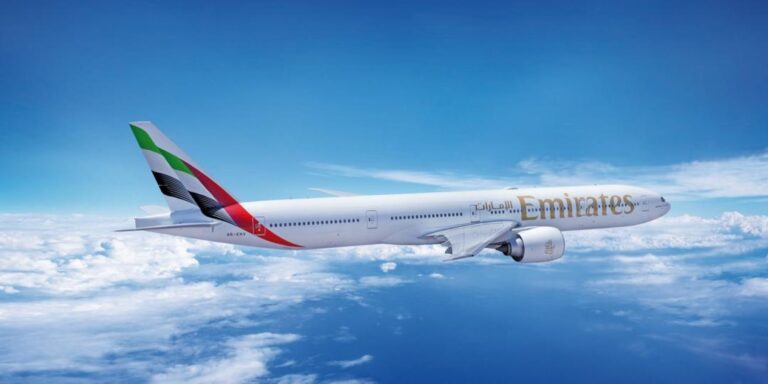
Emirates has further increased its presence across Africa with the introduction of additional flights to Entebbe in Uganda, Addis Ababa in Ethiopia and Johannesburg in South Africa.

Since the inaugural flight into Africa with Cairo as its first destination in 1986, Emirates has grown its presence on the continent and now serves 20 passenger and cargo gateways – increasing Africa’s connectivity and air transport market development.

Adnan Kazim, Emirates’ Deputy President and Chief Commercial Officer, said: “Africa has long been a priority region for Emirates and we will deepen our strategic focus on expansion and continued investment on the continent as an important anchor for our future network. The introduction of frequencies to our existing points in Uganda, South Africa and Ethiopia help support the region’s growth and provide critical links using Dubai as a key gateway to emerging economies across Asia and the Middle East.

“Over the past 30 years, Emirates has played a pivotal role in the development of the region’s aviation and tourism sectors – not just through scaling our operations but by establishing strategic partnerships with local governments, tourism boards and like minded airline partners across the travel ecosystem to nurture the industry and realise its untapped potential.”

Increasing frequencies to maximise connectivity

From October 27, Emirates increased operations between Dubai and Uganda from five weekly flights to a daily service. Operated via a Boeing 777-300ER, the additional flight will add 718 seats to and from Dubai-Entebbe every week, connecting to onwards destinations from Dubai such as Canada, the US, India and the UK.

At the 2024 Arabian Travel Market, Emirates signed a memorandum of understanding with the Uganda Tourism Board aiming to encourage a diverse range of international travellers to experience the destination’s natural, cultural and adventure attractions.

Emirates will also increase frequency in Ethiopia with a daily flight connecting Dubai and Addis Ababa from January 1. By boosting its flight frequencies, Emirates will provide more convenient access, particularly for travellers from the Middle East and Far East.

This will be followed by the fourth daily flight to Johannesburg from March 1 with a morning slot to and from OR Tambo International Airport. The additional flight brings Emirates’ operations back to pre-pandemic levels with 49 weekly flights into South Africa.

Once all the additional frequencies are activated, Emirates will provide 161 weekly flights between African destinations and Dubai.

Expanding the network to serve more of Africa

In Africa, the airline’s footprint expands to over 210 regional points through five codeshare and 18 interline partners, providing access to more regional points via one-ticket travel and simplified baggage throughput.

Through its interline agreement with South African carrier CemAir, Emirates enables customers to visit leisure points such as Margate and Plettenberg Bay.