THE Zimbabwe Parks and Wildlife Management Authority (ZimParks) has engaged celebrities as they up the ante in the ongoing anti-poaching drive.
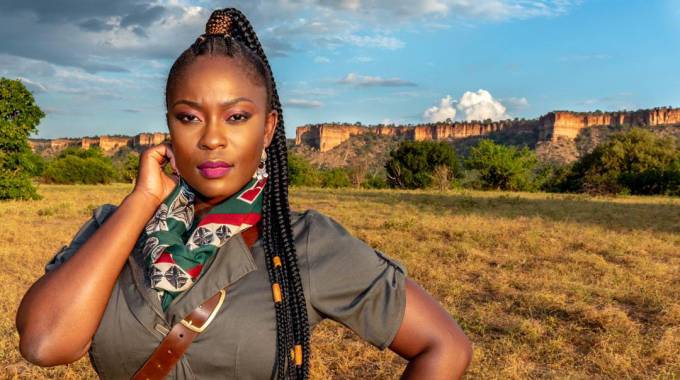
Among those selected to be the faces of the campaign are Jah Prayzah, high-flying Selmor Mtukudzi and popular ZBC-TV news anchor Rumbidzai Takawira.
The trio joins Hollywood star Danai Gurira, who has been the most famous celebrity from Zimbabwe on the campaign.
Internationally, ZimParks in partnership with Wildaid has engaged big brands like Jackie Chan, David Beckham and Prince William among others. to push the message of wildlife conservation.
The campaign is running worldwide under the theme “Poaching Steals from Us All”.
ZimParks spokesperson Mr Tinashe Farawo said his organisation is trying to elevate the profile of wildlife conservation in Zimbabwe and the sustainable utilisation of the country’s resources. He also emphasised the cultural and economic importance of wildlife as well as the destructive nature of illegal wildlife trafficking.
“We also want to promote our parks estate to domestic and regional tourist markets. So the use of these celebrities will ensure that all these things are achieved because in their own right, for example, Danai Gurira and Jah Prayzah — have huge followings.
“So if people associated with our conservation, if people can relate with our management of wildlife, it shows that we are serious about sustainable utilisation of our resources. It shows that we are serious about attracting more tourists to our country,” said Mr Farawo.
Mr Farawo said tourism in Zimbabwe is wildlife based, therefore when wildlife is thriving, tourism will also thrive.
“For our wildlife to thrive, we need to do a lot of awareness campaigns and this is part of these campaigns to ensure that our people appreciate the value that is attached to these animals.
“Our people must see these animals as economic opportunities because they will be benefiting, jobs will be created. That is why we need to create a lot of awareness and publicity around that so that people know that animals are important,” he said.
Mr Farawo said ZimParks is using its partnership with celebrities to reach a bigger and wider audience.
“This campaign will also promote Zimbabwe as a preferred destination not only internationally, but also domestically.
“You see that most people who come to visit our parks are international tourists. We need to continue on that trajectory But we also need to encourage our people to visit our parks, to know what we have to offer as a country because everyone is a spokesperson for the country, everyone is an ambassador for Zimbabwe, everyone is an ambassador for ZimParks, so that we can all achieve the dream of creating an upper middle-income economy by 2030 in line with President Emmerson Mnangagwa’s vision,” he said.
The ZimParks spokesperson singled out his boss, Mr Fulton Mangwanya, for bringing the partnerships into fruition.
“All these partnerships are made possible through the visionary leadership of Mr Fulton Upenyu Mangwanya, the director general of ZimParks.
“More people are coming, we are looking forward to having more partnerships with private players and with individuals so that we can all sustainably conserve our wildlife for the benefit of not just this current generation but also the future generations,” said Mr Farawo.
One of the ambassadors, Ms Takawira, said her role in the anti-poaching campaign has opened her eyes.
“I believe it is our mandate to spread the message of protecting our wildlife heritage. It plays a big part in our tourism industry, which can be a huge foreign currency earner for our country.
“Our first trip with the campaign took us to Gonarezhou, the second largest national park in Zimbabwe. It was disheartening to hear that there were no rhinos there. However, it was encouraging to hear that conservation efforts being made through the ZimParks partnership with Frankfurt Zoological Society and the Gonarezhou Trust will see rhinos being re-introduced into the national park, which is evidence that it is possible, through concerted efforts and awareness campaigns like this one, to protect our wildlife,” she said.
“We will be going across the country visiting wildlife areas and talking to people in communities that live in these areas, who are directly affected by wildlife as rising cases of human-wildlife conflict are being reported.
“It is imperative that we work together in teaching the people about the importance of our wildlife and how these conflicts can be managed and resolved without resorting to poaching. It’s all about keeping a healthy balance and ensuring our big five species do not go extinct,” she said – The Sunday Mail
Players in the hospitality sector say the rolling power cuts being experienced in the country have pushed up the cost of doing business and reduced Zimbabwe’s competitiveness in the region.
The sector requires uninterrupted electricity to power refrigerators, where perishable foodstuffs are stored, heating, lighting and powering steam cooking boilers, laundry equipment and various other appliances.
Hospitality Association of Zimbabwe (HAZ) president Innocent Manyera yesterday lamented the persisting power cuts.
In some instances, hotels, lodges and restaurants go for up to between 10 and 12 hours without electricity, resultantly adversely affecting operations.
“Our industry players are being negatively affected by the Zesa (Zimbabwe Electricity Supply Authority) load-shedding. The adverse effects are being experienced as we rely heavily on electricity for the bulk of our operations.
“This has been worsened by the fact that fuel queues are still commonplace. The most affected under the tourism and hospitality sector is the hospitality sub-sector since it needs energy 24/7,” Manyera told NewsDay Business.
He said when power is switched-off, most players in the sector resort to diesel-powered generators and gas as energy sources, although their availability on the formal market remains a huge challenge.
“This has seen businesses buying fuel and gas on the parallel market, thereby increasing the cost of doing business. At the end of the day, we make huge losses, as we cannot afford to price ourselves out of business by continuously hiking tariffs and prices of goods and services,” the HAZ boss said.
Manyera, who is also CUT Hotel and Orange Grove Motel general manager, said his association was engaging relevant stakeholders to ensure Zimbabwe did not continue to lose potential visitors and tourists,
who may shun the destination due to power outages.
“We cannot afford to continue losing visitors and tourists. We’re consulting through relevant offices, to ensure Zimbabwe remains a destination of choice and continues on a positive growth trajectory on the ease of doing business, as we push towards Vision 2030 to make the country a middle-income economy.”
Power utility Zesa has attributed the load-shedding to reduced water levels at Kariba Dam, which has resulted in suppressed electricity generation capacity. – News Day
Zimbabwe has sparked outrage after it lifted a ban on hunting buffalo with bows and arrows in a bid to attract big-spending foreign tourists.
A spokesman for the Parks and Wildlife Management Authority this week said only heavy-duty bows would be permissible in an attempt to ward off criticism that such weapons raise the risk of only wounding the thick-skinned beasts.
“These type of bow and arrows kill instantly,” said Tinashe Farawo.
Hunters who want to shoot buffalo by bow will have to use modern arrow-heads of at least 30mm cutting length, present their equipment for inspection and be accompanied by trained guides.
The government has maintained the veto on using the ancient weapon to hunt other animals with a firm hide including the hippopotamus, elephant and giraffe. Only guns can be used against such creatures.
Zimbabwe hunt-providers have pushed for the reform as they seek to attract mostly American enthusiasts.
Archers have been allowed to hunt lions for years. In 2015, an American trophy-hunter wounded Cecil the lion with an inaccurate arrow-shot during an illegal hunt. The majestic cat escaped into the bush but was found, exhausted and in pain, the next morning before being shot to death by rifle.
One Zimbabwe hunter, who asked not to be named, said: “I don’t like bow and arrow, and I don’t care how sophisticated this equipment is now, we know that there are fewer chances of mistakes with guns.”
“In many ways, I think it is cruel, risky,” he said.
A dedicated wildlife expert, who does considerable voluntary work in Zimbabwe’s vast Hwange National Park, said: “This is a dreadful development. I reluctantly accept hunting as a financial necessity, but not with bow and arrow. Remember what happened to Cecil. This is wrong. And we don’t have much expertise here to know if the equipment is ok.”
The Professional Hunters’ Association said Zimbabwe had to “fall in line with most other southern African countries and allow Zimbabwe a fair share of the market place. Modern bows are more than adequate to efficiently hunt a buffalo.”
Emmanuel Fundira, president of the Safari Operators Association of Zimbabwe said “new generation” bows and arrows had been thoroughly tested and were “more effective than traditional ammunition used for hunting. We have found no negative outcome.”
Mr Fundira said Zimbabwe regretted the death of Cecil the lion: “We wished this had not happened. Cecil’s death raised so much money for others but not a cent came back to Zimbabwe to help us protect our wildlife.”
President Emmerson Mnangagwa, desperate for investment for bankrupt Zimbabwe, last week told a group of Chinese tour operators: “You, who are lovers of golf, I will offer you land in the national parks so that as you play golf, you can see elephants and lions.”
Zimbabwe will shortly export 35 young elephants captured early this year to China.
In the last few years, the Zimbabwe Parks and Wildlife Management Authority says it sold about 100 elephant youngsters, mostly to Chinese safari parks to raise money for conservation and anti-poaching.
Jenman African Safaris has introduced the Northern Experience Fly-In Safari, a luxury multi-country adventure covering South Africa, Namibia, Botswana, and Zimbabwe over two to three weeks. This exclusive itinerary blends breathtaking landscapes, cultural encounters, and unforgettable wildlife safaris in some of Africa’s most iconic destinations.
Explore 4 Bucket-List Destinations in One Safari
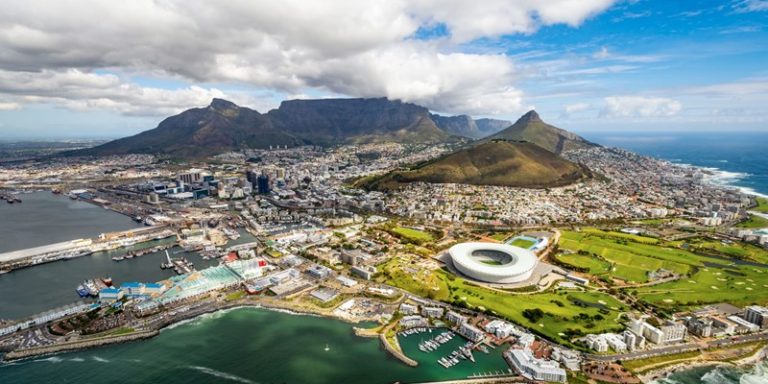
South Africa – Cape Town’s Top Attractions
The journey begins in Cape Town, where travelers explore: ✅ Table Mountain – One of the New 7 Wonders of Nature ✅ Bo-Kaap & Company Gardens – A glimpse into South Africa’s heritage ✅ Cape Peninsula Tour – Including Chapman’s Peak, Cape Point, and Clifton Beach ✅ Sea Point, Camps Bay & Hout Bay – Stunning coastal landscapes
Namibia – Desert Landscapes & Cultural Encounters
Flying to Swakopmund, guests embark on a 10-day Namibia safari, visiting: Namib Naukluft National Park – Home to Sossusvlei & Deadvlei’s towering dunes Spitzkoppe Rock Art – Discover ancient San paintings & engravings Omaruru Wine & Distillery Tour – A unique Namibian wine-tasting experience Etosha National Park – Premier big game viewing
Botswana – Okavango Delta & Chobe National Park
The adventure continues to: Okavango Delta – Experience a mokoro safari through Botswana’s pristine waterways Chobe National Park – Known for its large elephant herds & river safaris Chobe River Cruise – A breathtaking sunset wildlife experience
Zimbabwe – Victoria Falls & the Zambezi River
The grand finale is at Victoria Falls, where guests enjoy: Victoria Falls Tour – Witness “The Smoke That Thunders” up close Zambezi River Sunset Cruise – A magical farewell to an extraordinary safari
Why Choose This Luxury Safari?
✔ Fly between destinations – Save travel time & enjoy premium comfort ✔ Exclusive wildlife safaris & cultural experiences ✔ Unparalleled photography opportunities in Africa’s most scenic locations
Zimbabwe’s hospitality industry is looking forward to closing the year with an above 50% capacity utilisation, but challenges such as price distortions, fuel shortages and power load-shedding still remain a threat to the industry’s viability.
Hospitality Association of Zimbabwe president Innocent Manyera told NewsDay that though the industry was poised for growth, there was a need to address operational bottlenecks.
“There have been challenges that we feel will be addressed soon, especially the issue of pricing, fuel shortages and of the recent load-shedding. These cause the cost of doing business to be on the higher side,” Manyera said.
“However, as a sector, we remain positive in support of all initiatives that will make Zimbabwe a destination of choice. As a country, we look towards a positive trajectory so that we close the year above the 50% capacity utilisation mark,” he said.
He, however, could not disclose the industry’s current capacity utilisation.
“The sector is quite sensitive. Any development in the economy will directly affect tourism. We hope the price issue will be put to rest, fuel availability to allow domestic and foreign travel is addressed, load-shedding is attended to in order to reduce the cost of doing business and cost of living to remain stable to reduce skills flight to neighbouring countries,” Manyera said.
“Also the revival of destinations like Kariba and Vumba will be an advantage to the sector. On this, we are happy the Ministry of Environment, Tourism and Hospitality Industry initiated a stakeholders’ consultation to get ideas on the way forward. Connectivity by air or road should also be looked into. We need the resuscitation of our own local industries in order to reduce imports since they usually take long before one gets supplies.”
Manyera said travellers continued to enjoy peace in the country, with government also intervening to try and gain lost relations with sceptic foreign countries.
He said occupancies were mainly attributed to activities in Harare and Victoria Falls.
“However, some destinations like Kariba and Vumba have been low and we do hope with combined efforts and with relative government offices, we will be in a position to revive these destinations,” he said.
The tourism sector has been identified as a key economic pillar in the current transitional stabilisation programme and is seen reaching five million tourists and contributing 15% to the Gross Domestic Product from the current 8%, by 2030. – News Day
One of the eSwatini’s most pristine getaways, Dwaleni Farm Lodge, has launched an event that is believed will attract tourists, both local and international.
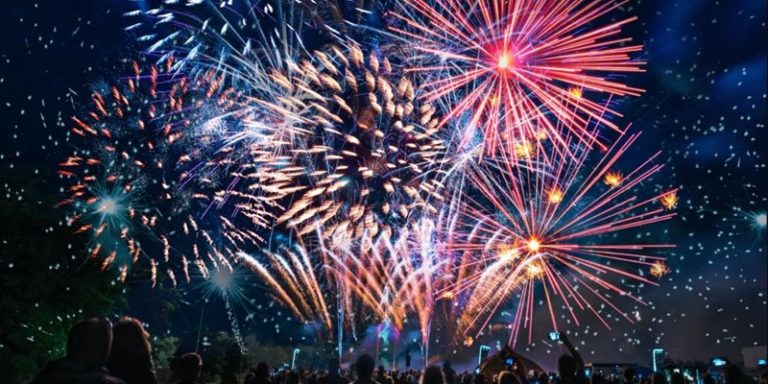
The eSwatini Mobile Festival Xplosion, scheduled for July 27, is the first event of its kind and will feature award-winning fireworks displays as well as a line-up of world-renowned musical acts.
The developer of the concept, Msimisi Dlamini of Dwaleni Farm Lodge in Manzini, the country’s second-largest urban centre after Mbabane – believes that the event, which will be annual, will serve as a major tourist attraction, have significant spin-offs, and benefit the country’s hospitality industry.
“More than an experience, this is a festival with the goal of becoming a world-class event that attracts global recognition and support — a way of luring tourists into the country, as well as a means of showcasing eSwatini’s attractions,” said Dlamini.
The festival will focus on fireworks, cuisine, music and children’s activities, with fireworks being presented by Fireworks For Africa, which has performed presentations around the globe. The cuisine will include a menu that is culturally diverse – Swati, Chinese, Portuguese and Indian, with game meat. There will also be quad biking, jumping castles and more for children to enjoy. – Tourism Update
The Botswanan government announced yesterday that it was “lifting the hunting suspension in an orderly and ethical manner” – a decision that seemed inevitable, but nevertheless is an enormous blow for Botswana’s tourism and conservation reputation.
Since President Mokgweetsi Masisi’s announcement last year proposing lifting the hunting ban, the process has seemed a well-orchestrated election campaign, casting hunting as the solution to Human-Elephant Conflict (HEC), rural poverty, and elephant population control.
The Botswana Democratic Party has been in power since independence in 1966 but dropped to a record low of 46% of the voters’ support in the last election. By lifting the hunting ban, it is believed that Masisi hopes to retain the rural votes that he desperately needs to win the elections in October.
The main justification for lifting the hunting ban has been the supposedly increasing levels of Human-Wildlife Conflict (HWC), particularly involving elephants. There is no doubt that HWC is a real problem for the people living with wildlife on a day-to-day basis, and this indeed needs to be addressed.
However, there is no research-based evidence that suggests HWC is actually increasing. Furthermore, trophy hunting can never and should never have such an impact on the elephant or other wildlife densities that it would actually reduce HWC. Communities should be assisted in finding better and more sustainable ways to deal with elephants and other wildlife.
The government is now not only talking about lifting the ban on elephant hunting but also predators, as the government claims predator numbers are also increasing.
Again, there is no scientific evidence to back up any of these statements. Many areas in Botswana are still trying to recover from overhunting in 1980 to ‘90s, particularly of the lion population. The mature elephant bulls that would be of interest to the trophy hunter are under siege from increased poaching. with recent surveys indicating a material drop in numbers of bulls.
Masisi claims the hunting ban had negative impacts on the livelihood of local communities, which is to be expected, as the vast majority of ex-hunting blocks in Botswana were never successfully put out for tender, and hence were not occupied by the photographic tourism industry; a number was in fact retained by the existing hunting concessionaires.
Tourism, the second largest industry in Botswana, was barely consulted in Masisi’s Social Dialogue process, and has been cowed by statements such as “you know which side your bread is buttered on”.
Clare Doolan (Sales and Product Manager – Safari Destinations) says: “We believe more creative solutions need to be found for communities impacted by HEC, by giving these communities access to tourism revenue through diversification of the tourism product and increasing community participation.” – Tourism Update
The United Kingdom (UK) has hailed Zimbabwe’s elephant conservation practices, which have seen the country’s elephant population increasing to 85 000 against a carrying capacity of 55 000.
Responding to a written question by Conservative Member of Parliament for North East Hampshire Mr Ranil Jayawardena on Monday, Minister of State for Africa at the Foreign and Commonwealth Office and Minister of State at the Department for International Development Mrs Harriet Baldwin said the UK was working with Zimbabwe on long term solutions to the issue.
The responses were captured in the United Kingdom’s Hansard.
She said the UK will also continue to support wildlife conservation in the country.
“Zimbabwe has the second largest population of elephants in the world and overpopulation of elephants is a result of good conservation practice,” said Mrs Baldwin.
“We are working with the Government of Zimbabwe on long term solutions to the issue, such as our Green Corridors initiative, and will continue to support wildlife conservation in Zimbabwe.”
Mr Jayawardena had asked on the progress regarding an assessment the Department of Foreign and Commonwealth Affairs had made in relation to the accuracy and implications of Zimbabwe’s elephant population.
“To ask the Secretary of State for Foreign and Commonwealth Affairs, what assessment his Department has made of (a) the accuracy and (b) the implications of the assessment by the Tourism Minister of the Republic of Zimbabwe that Zimbabwe’s carrying capacity is 55 000 elephants, but the country now has a population of 85 000 elephants,” asked Mr Jayawardena.
Environment, Tourism and Hospitality Industry Minister Prisca Mupfumira recently revealed that the country was now overpopulated with elephants and Government was pushing for the lifting of ivory trade restrictions provided for under the Convention on International Trade in Endangered Species of Flora and Fauna (CITES).
Zimbabwe Parks and Wildlife Management Authority spokesperson Mr Tinashe Farawo said some of the country’s major conservation practices included anti-poaching patrols, research and monitoring of the species, as well as carrying out conservation education and awareness campaigns in local communities living with wildlife.
“We also educate our communities living with wildlife to view elephants and any other wildlife as an economic opportunity,” said Mr Farawo.
He said communities benefit from proceeds made by Government through tourist visits and the sale of the same species. Early this month, Government announced that it earned about US$2,7 million after exporting 97 elephants to China and Dubai. The money was used to strengthen the country’s conservation activities.
Speaking at the Africa Elephant Summit held in Kasane, Botswana early this month, President Mnangagwa emphasized the need by the global community to lift a ban on ivory trade.
He said poverty eradication in rural communities can be enhanced if countries are allowed to “trade and benefit” from the elephants. – Zimparks
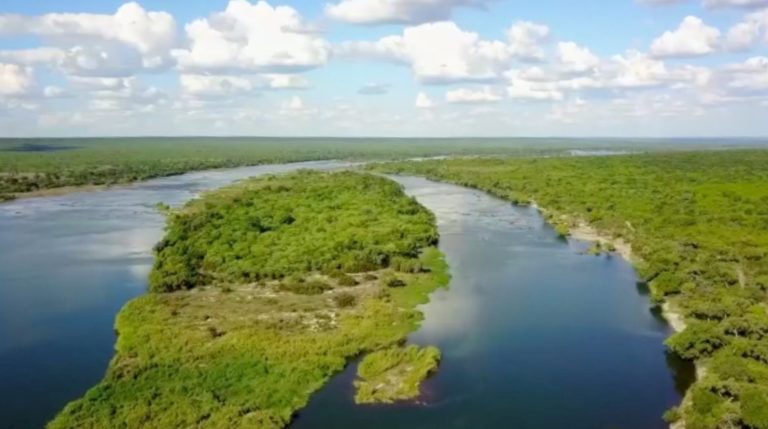
Isibindi Africa Lodges will open an exclusive new tented camp in the Zambezi National Park, 40km upstream from Victoria Falls and halfway between Victoria Falls and Kasane.
Tsowa Safari Island, which is 1.5km long and 400m wide and is split by a small river, will open on August 1. It can accommodate 12 guests in six luxury en-suite tents, each of which has a secluded view of the river where guests can watch the animals come to the water’s edge to drink.
The lounge and dining area is in the style of a Bedouin tent, with timber frames and an elevated wooden deck, with two infinity pools on site.
The previously uninhabited island is made up predominantly of riverine woodland and natural springs and is ideal for wildlife photography. Activities include game drives and walk on the mainland of the park. Daily guided walks are offered, along with a sundowner cruise or canoe trip on the river.
Rates are fully inclusive of accommodation, meals, local drinks, game drives and walks, guided island walks, sundowner cruises, guided canoeing, one return trip to Victoria Falls, and laundry. – Tourism Update
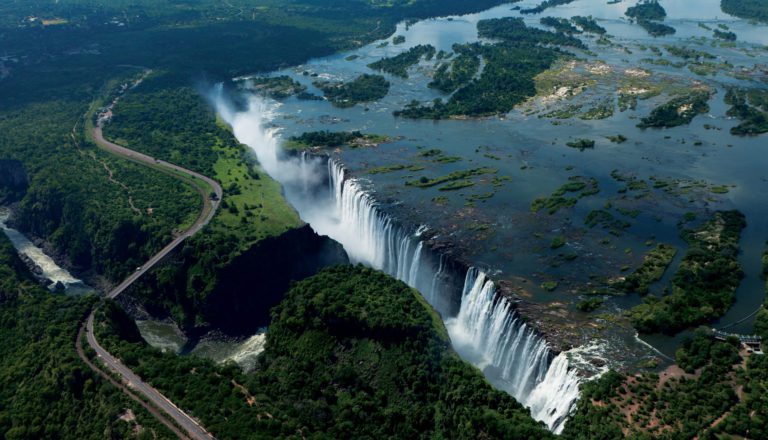
If you didn’t know already, the Smoke that Thunders is the name of one of the seven natural wonders of the world – Victoria Falls. As a prestigious tourist destination, getting there hasn’t always been easy. Visitors would have to transit to Lusaka, Harare or Johannesburg to get a connecting flight. But the new airport has just made visiting the beautiful falls so simple.
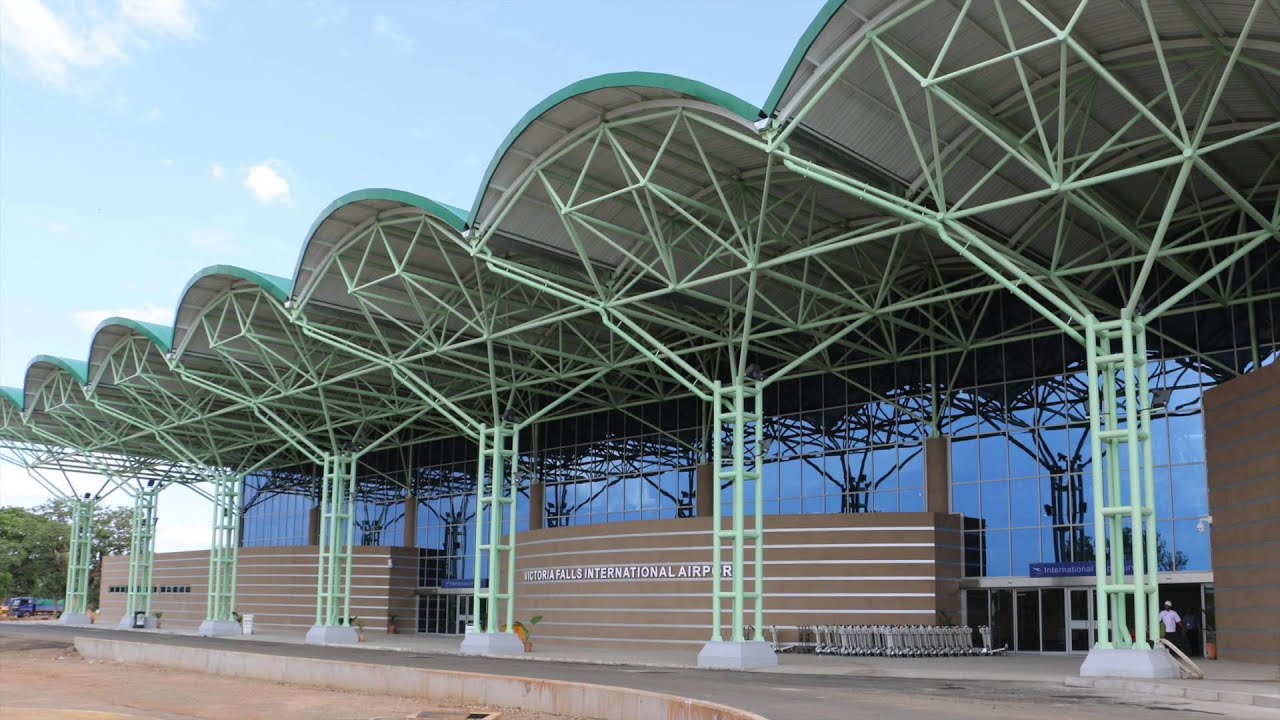
Victoria Falls is Africa’s most popular tourist destination with an estimated one million visitors every year. The new airport is located on the Zimbabwean side of the waterfall, but a special visa allows travellers to cross the border into Zambia. Opened in 2016 the new airport has increased the hub’s capacity from 500,000 to 1.5 million passengers.
Expanded Airport
The new airport, which cost an estimated US$150 million, is now serviced by Ethiopian Airlines (the largest African airline), FastJet, British Airways, South African Airlink, Air Namibia and Kenyan Airways. Although only open for 12 hours a day, reports say airlines like Virgin Atlantic and Emirates also plan to fly into Victoria Falls.
Photo: Victoria Falls International Airport
According to the country’s broadcasting corporation, there’s been a 25 percent increase in the number of passengers from January to August 2018. As a result, the Zimbabwe Parks and Wildlife Management Authority has extended viewing times at the Falls from 7pm to 10pm, and visitors can enjoy night drives in the Zambezi National Park, fishing and picnic sites along the Zambezi River and there are also plans to open a spa.
According to The Telegraph, “The airport is also an opportunity for other nations and their flag carriers, which now have a direct route to one of the Seven Wonders of the Natural World.” Zambia has capitalised on this by embarking on the construction of a new airport.
In 2015, construction began on the new Kenneth Kaunda International Airport (KKIA), adjacent to the current airport. The project, which is expected be completed in 2019, will include two hotels, one with 70 rooms for passengers in transit and one that will be open to the general public. There will also be a shopping mall, airport offices and a fire rescue centre. Approximately six million visitors are expected to travel through the new airport, including those unable to find a direct flight to the Falls.
Things to Do in Victoria Falls
There are plenty of activities to enjoy at Victoria Falls, from bungee jumping and white water rafting, to microlighting and more. As some places such as the Devil’s Pool can only be visited from the Zambian side of the Falls, visitors wanting to visit both Zambia and Zimbabwe can apply for the KAZA Uni Visa. Need some inspiration? There are apps like Victoria Falls Adventures that let you book activities near the Falls in Zambia, Zimbabwe and Botswana (Chobe National Park), the Zambia Offline Travel Guide, Try Zambia and the Victoria Falls Guide.
Visitors should bear in mind that different currencies are used in Zambia (Kwacha) and Zimbabwe (USD) and that there are different rates for entry to the falls. The Zimbabwean side costs US$30 for international visitors, while the Zambian side is US$20 – but just so you know, the Zimbabwean side has better views!
The falls are at their fullest during the rainy season, from December to April, but the Devil’s Pool, a natural rock pool on the edge of the falls, can only be accessed between July and August. So do your planning now!