

Shumba and Busanga Bush Camp now open

Air Seychelles launches flights to Johannesburg

Wesgro launches video to showcase Cape trail running

SAA announces a new interline partnership with Alaska Airlines

New lodge to open in Victoria Falls

Sustainable conservation efforts for Elephants

RwandAir to introduce flights to Israel

National carrier RwandAir will commence direct flights to Tel Aviv – Israel’s economic and technology hub – on June 25th, the airline has announced.
This will be the airline’s 29th destination and second destination in the Middle East, after United Arab Emirates.
RwandAir will fly to Tel Aviv three times a week from Kigali.
The new route will be operated on Tuesdays, Thursdays and Saturdays by a Boeing 737-800NG offering 16 seats in business class and 138 seats in economy class, according to the carrier.
The airline’s officials say that the development will among things strengthen ties between the two friendly nations as well as boost business.
Yvonne Manzi Makolo, RwandAir’s Chief Executive said that adding Tel Aviv to their network is part of the carrier’s long term plan to link Rwanda to the rest of the world.
“Tel Aviv is one of the world’s leading tech hubs and we look forward to flying business travelers as well as pilgrims visiting the Holy Land, to and from our network on this new route.
It will also be a great opportunity to ease travel and strengthen diplomatic ties between the two countries.”
The route is further expected to be relevant as it will also connect regional travelers to the Middle Eastern country.
According to the airline, tickets are now available for sale through RwandAir website, sales offices and travel agencies.
RwandAir has been in recent years expanding to new destinations as it seeks to reach previously unserved markets, which has had multiple impacts including boosting hospitality sector performance.
In April, the airline launched flights to DR Congo’s capital, Kinshasa.
Have You Tried This Favourite Zimbabwean Delicacy?

History
There is no documented history of the mopane worm dish in Zimbabwe. However, a stone-age pit discovered at Pomongwe Cave in Zimbabwe showed a deposit of dried mopane worms that are believed to be almost 6,000 years old.
According to Food and Agriculture Association (FAO) the mopane caterpillar is one of the best-known and most economically-important forestry resource products of the mopane woodlands in southern Zimbabwe, Botswana and northern South Africa.
Research has found that mopane worms are not only good for eating from a nutritional standpoint, but they also may be key to maintaining the ecological balance of the dry bush they inhabit.
Cooking the Mopane Worms
They are harvested during the rainy season, after which they are cleaned, sun-dried for preservation, and made available for consumption throughout the year.
The tasty worms can be eaten dry and crispy as a snack or can be drenched in sauce, or added to porridge made from maize – a staple food in Zimbabwe. Most people prefer to fry the worms with a combination of tomatoes, garlic, peanuts, chillies, and onions. Some of the recipes to cook the caterpillar can be found online.
Mopane worms can also be added to a stew, boiled to soften them up, or simply eaten raw and fresh off a tree. When they are fresh, they are less chewy and their distinctive and unique flavour is undiluted by other ingredients.
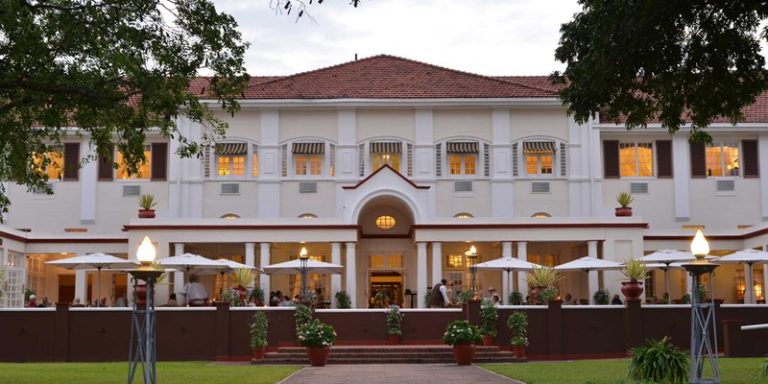
Major hotel group embarks on major refurbishment programme
5 Historical Sites You Must See In Zimbabwe
Zimbabwe has a rich history with remnants dating back centuries and archaeological structures only matched by the Great Pyramids of Egypt. Like many proud African nations, Zimbabwe maintains a strong connection with its ancient past. Here are 5 of the best historical sites in Zimbabwe.
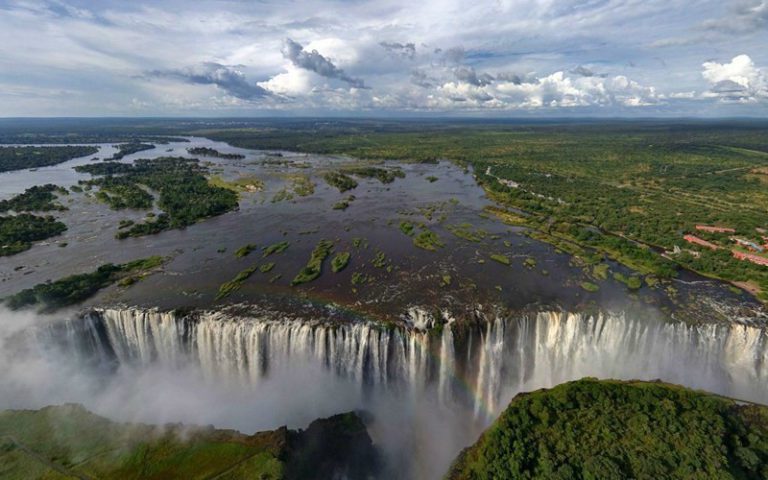
1. Mosi oa Tunya (Victoria Falls)
Known as one of the seven natural wonders of the world, the Victoria Falls form one of the most spectacular World Heritage Sites. The falls are about 1.7 kilometres wide and gush thousands upon thousands of litres of water into the gigantic chasm below every minute. The falls have garnered much attention over the centuries, and have been marvelled at by a diverse range of figures including early Zimbabwean missionaries and ancient tribes who conducted worship rituals at the site, as well as leading modern figures such as David Livingstone.
2. Ruins of Great Zimbabwe
Ancient ruins of prehistoric Great Zimbabwe. The Great Zimbabwe Ruins are one of the best-known artifacts of African civilization formed in the centuries and millennia before the Industrial Revolution. Appealing to history buffs and thrill-seekers alike, these ruins are truly a wondrous spectacle to behold. Dating back to a great kingdom in the 11th century, these ruins are made entirely of hewn stone, and are held together with no mortar or other visible mechanisms at all. Instead, the whole structure remains upright seemingly through nothing but the sheer force of gravity and balance, with rock assembled upon rock fascinatingly. To behold the magnificent remains of this once great civilization, head on over to the Zimbabwean southern city of Masvingo, where the ruins lie a short way outside the center. Watch out for: numerous enclosure-like structures
3. Matopos Hills
The Matopos Hills/Matobo Hills are famous for their ancient rock paintings, generally attributed to ancient cave dwellers who lived in the land some 2000 years back. These paintings depict a civilization that left little in the way of written records, but some aspects of life in that era may be gleaned from the artwork itself. The Hills themselves have been enclosed in a stunning national park, a place which houses the remains of the great explorer Cecil Rhodes, too.
4. Khami Ruins
Found near Bulawayo, Zimbabwe’s second largest city, the Khami ruins and National Monument are relics of civilization in many ways similar to the one remembered at the Great Zimbabwe location. It features the stone walls enclosures of an ancient civilization and the cultural hallmarks of a great “mambo”, or king. The stone structures are terraced into multiple levels, albeit less well-preserved than those at the Masvingo-based Great Zimbabwe. However they remain unmissable, as they are made of complex and intricate stone-work, and their study has led to much progression of knowledge regarding the Stone-Age civilizations of old.
5. Batonga Museum
According to historical archives, the BaTonga peoples arrived in Zimbabwe in about AD 300. The BaTonga Community Museum contains historical and educational information about the culture and life of the BaTonga people. The museum is located in Binga on the shores of Lake Kariba. The BaTonga tribe had a culture focused around fishing and growing crops, along with hunting and gathering. This traditional way of life was largely disrupted by the construction of the Grand Lake Kariba, the nation’s largest lake, in 1956. The museum showcases the ways and life of this ancient group of people throughout the centuries.