

The executives told Business Digest during the recent 2019 Africa Tourism Leadership Forum (ATLF) and Awards in Durban that Zimbabwe should try and make Victoria Falls affordable so that Africans can also marvel at one of the Seven Natural Wonders of the World.
The executives said in the spirit of promoting intra-Africa trade, African countries should devise strategies that will allow its people to travel across borders to visit tourism destinations.
The three-day meeting, whose theme was “stimulating intra-Africa Travel through thought leadership” was attended by chief executives in travel, aviation, hospitality and tourism sectors.
ATLF is a Pan-African dialogue platform that brings together key stakeholders of Africa’s travel, tourism, hospitality and aviation sectors to network, share insights and devise strategies for intra-Africa travel and tourism growth across the continent, whilst enhancing the brand equity of “Destination Africa”.
Travelstart senior commercial manager Linda Balme said it costs under R10 000 for South Africans to travel to Thailand, Bali or other such destinations including flights and accommodation for seven nights at a three-star hotel.
She said for a four-star hotel it costs around R12 000, while a special holiday package to Victoria Falls for three nights costs more a South African one.
“That does not include any excursions which the Thailand Tourism Board will throw-in. Coming from outside, it is important that we make airfare affordable, accommodation affordable, even if it is in the low season of travel so that we allow Africans to travel internally,” she said.
“Just give us better deals and we will fill rooms. It is better to have a hotel that is full than one that is 60% with euros and pounds. Rather fill it and it will generate more tourism and it will be more beneficial for everyone and it will keep trade going between the two countries and the continent as a whole. We need more airlines supporting those routes and more locals visiting Victoria Falls.”
In South Africa, 74,4% of tourism comes from within Africa.
World Travel Tourism Council regional director-Africa Jillian Blackheard said: “As more Africans travel within our own countries and the continent, the low-hanging benefits for the travel and tourism sector are negated trends of seasonality, increased occupancy based on short lead time sales, tourism product diversification and demand outside limited traditional tourism regions and increase in tourism supply chain and demand for local circular economy.”
In another interview, Steward Travel coordinator and national tour guide PJ Mulaudzi said the Victoria Falls was no doubt the most expensive destination in Southern Africa.
“We cannot tell them what to charge. But when you go to Zambia, things are far much cheaper. You have a situation where even airlines are taking advantage of the Zimbabwean issue. On any given day it is 30-40% cheaper to fly out of Livingstone to Johannesburg than it is to fly out of Victoria Falls,” he said.
He said what tourists pay at a five-star hotel in South Africa is the same amount of what they pay for a bed and breakfast (BnB) in Victoria Falls.
“The hotel in Sun City is R2 500 a night and in Victoria Falls, you would have paid R10 000 for that kind of hotel,” Mulaudzi pointed out.
He said Zimbabwe needs to invest in upgrading its facilities in Victoria Falls otherwise it will continue to lag behind Zambia.
“I will give an example. The development in Victoria Falls is no way near what is happening in Zambia. The excuse they always come up with on the Zimbabwean side is that it is a national heritage site so they cannot do developments. Livingstone is also one. You go to the falls from the Zambian side and the hotel key is your entrance fees. You don’t pay even a cent if you stay in a hotel there. If you are a non-resident, you pay US$20.”
Mulaudzi added: “On the Zimbabwean side, which has 70% of the Falls, you pay US$30, which is a fair price. But the interesting thing is that on the Zambian side, they have state-of-the-art facilities –the toilets, the craft market. You check into any hotel in Zambia, you get ponchos (raincoats) complimentary of the hotel. On the Zimbabwean side, you can stay in a US$1 000-per-night hotel, they don’t even give you anything.
“You go to the Falls and you have to pay entrance fees. You pay US$30 to enter the Falls and the toilets they have there were built by David Livingstone himself in 1855. They cannot even upgrade their toilets. The toilet paper you find, if you are lucky to find any, is the cheapest toilet paper but you have paid US$30.”
He said a visitor also has to pay US$1 for a one-quarter page leaflet with information about the Falls and a map of the trail in addition to the entrance fees.
“It is a matter of they just want to take, take and take and they don’t want to give anything back. There is a need to intervene,” Mulaudzi said.
He said there was also need to relook the payment structure at the Matobo National Park and the levy for the helicopter rides.
“You go to Matobo National Park and US$15 per person to enter. The only thing you go to Matobo to see is Cecil John Rhodes’ grave and the bushmen paintings. You have paid US$15 at the gate and, when you get to the paintings, there is someone there waiting for you to pay US$10 to see the paintings. You go to the grave, there is someone waiting there to pay to US$10 to see the grave. So why did I pay the entrance fee because it is only the grave and the paintings they have got?” he said.
“Go and check the toilets they have at the paintings. The seats are broken, there are holes and it doesn’t flush. There are these 200 or 500-litre drums of water and you have to take the water and put in the toilet and they are charging you US$10. If they want to charge that money, why not charge one entrance fees at the main gate? Again, they just want to take, take and take and not give anything.”
On the helicopter rides, he said: “The helicopter ride is US$150 and when you get to the helipad, there is someone waiting there and they want US$15 for Parks fees. Why not just charge US$165 and sort each other out later? You can’t even pay it by credit card, they want hard cash.”
He said the Zimbabwe National Parks and state tourism departments were to blame for this.
“The people I have a problem with are the national parks and the tourism authority, which are under the government. They must look more at promoting the destination more than taking and taking. At Victoria Falls if you charge me US$30 and I have clean facilities, I have no problems with paying. I just don’t understand, with the US$30, why they do not provide quality toilet paper, renovate or just buy new seats, which cost just R500 or R600, which is nothing compared to what they are charging,” he said.
Mulaudzi, however, said the best tourist destinations, which are well-maintained and value for money were the Antelope Park in Gweru, the Great Zimbabwe Monument and Hwange National Park.
– The Zimbabwe Independent
Dates for the 2019 Kariba Invitation Tiger Fish Tournament
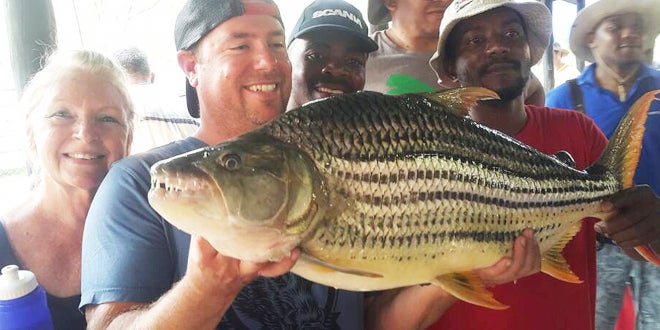
Dates for the 2019 Kariba Invitation Tiger Fish Tournament (KITFT) have been set for October 30, 31 and November 1 in Kariba, Zimbabwe. The Kariba Invitation Tiger Fish Tournament is one of the most popular Fishing Tournaments in Southern Africa and by far the largest in Zimbabwe.
It is also the largest single-species Four-man Fresh Water Fishing Tournament in the world. It is held annually on the waters of Lake Kariba. This year the tournament will be celebrating 58 years of Tiger Fishing in Zimbabwe.
KITFT Tournament Director, Rod Bennett says the event is the largest single-species fresh-water tournament in the world. “We have a number of foreign as well as local teams that all descend on Kariba. The tournament boosts all the local lodges, hotels and the houseboat industry as well.”
Bennett says 80 teams from across the world are expected to participate at the tournament this year.
KITFT is a non-profit organisation and all funds generated are used to run the tournament. Fish caught during the tournament are normally donated to local orphanages.
Inflation affecting the Zimbabwe tourism sector pricing: Matamisa
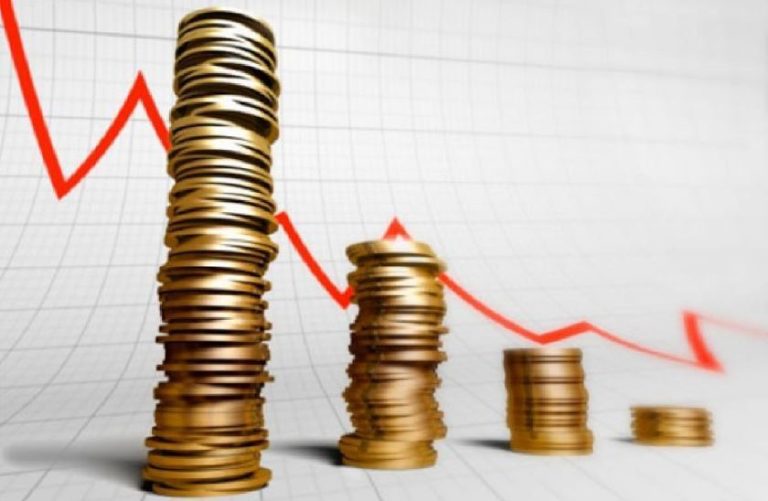
ZIMBABWE’S tourism sector is in a catch-22 situation, with players now failing to even budget on a monthly basis due to price instability.
The southern African nation is currently under economic siege, with inflation reaching alarming levels due to the continued devaluation of the local currency after the central bank recently removed exchange rate controls on the bond note.
Tourism Business Council of Zimbabwe chief executive officer Paul Matamisa told NewsDay Business that price instability was rendering tourism uncompetitive while threatening its viability and growth.
“We are certainly affected. You can’t make a budget even on a monthly basis because it is not going to be relevant in two weeks’ time, it would have changed. So when you are working like that certainty in terms of the business outcome and so on is not there,” he said.
“So we are seeing a situation whereby people are being shortchanged in planning, as a result. So we are affected, the prices keep on changing and things are not at all assured they will be the same tomorrow. Tomorrow it’s different.”
Matamisa also said they were also being affected by the exchange rate, which changed regularly.
“The other thing which is mainly affecting us is obviously the question of the value of the US dollar in comparison to the RTGS dollar. So that’s where most of these problems are actually emanating from,” he said.
Pleading with businesses and individuals to stop speculative behaviour, he added: “There is always an element of human fear which leads them to price beyond what one should be charging simply because they think that tomorrow this item would have gone up and that creates problems. That’s where we may get some form of inflation and pressure coming from.
“On the issue of products, although they are available, sometimes they are not being made available because a few people fear that the price of sugar might go up tomorrow. So you will not be able to project well and people would be making guessed sort of decisions which makes it difficult for one to run a business,” he said.
Tourism is one of the country’s biggest foreign currency earners, having raked in about US$335 million in 2018. – NewsDay
Zimbabwe airports to use solar energy
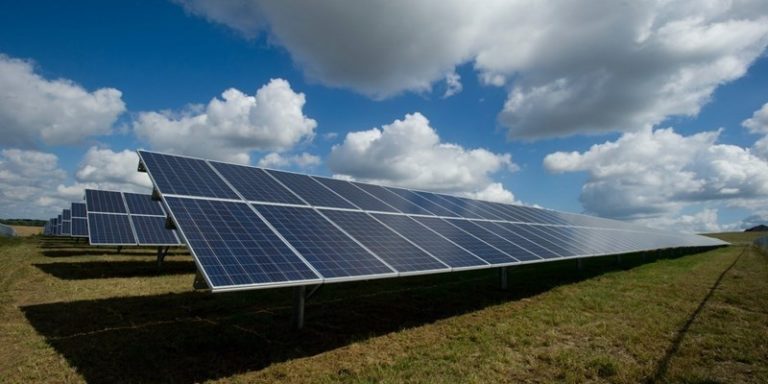
Zimbabwe is set to install a solar energy system at all of the country’s airports to ensure uninterrupted power supply.
Zimbabwe’s Energy and Power Development Minister, Advocate Fortune Chasi, said that airports were a key infrastructure and their power supply should be guaranteed. This could only be ensured by harnessing solar energy.
“The basic idea is that airports are a key national installation and we have to have a situation where there is an assurance that there won’t be any power outage there,” said Chasi. “If there is going to be an outage [at airports], it could seriously compromise on safety as well as cause a serious dent on tourism.”
Chasi added that announcements about which company would undertake the project, as well as its commencement and completion dates, would be made in due course.
Old Mutual plans major Victoria Falls hotel project

THE country’s largest financial services group, Old Mutual Zimbabwe Limited, is geographically diversifying its properties with a massive hotel development plan in the resort town of Victoria Falls.
The development, which will see the construction of a hotel and conference centre, is also in line with supporting the tourism industry, which is the main economic activity for Victoria Falls.
Group chief executive officer, Mr Jonas Mushosho, told our Harare Bureau that tourism is an integral part of the economic agenda, and the sector has been identified as one of the low-hanging fruits that Zimbabwe should take advantage of for growth.
As a major tourism destination in the country, which is also one of the Seven Wonders of the World, Victoria Falls will always be an ideal investment area, creating scope for the new hotel and conference development.
“In Victoria Falls, we are looking at both a hotel and conference centre,” said Mr Mushosho in an interview on the sidelines of the group’s financial results presentation.
“We are diversifying geographically, a lot of our properties have been concentrated in big centres like Harare and Bulawayo, but we believe there are other areas of interest and economic activity, so we have diversified into Hwange, Victoria Falls and Ngezi.
“Victoria Falls is a major tourism destination and we believe that it is important to develop an ecosystem that supports the tourism; therefore, our developments and investments there are part and parcel of supporting that ecosystem.
“Tourism in Vic Falls is an important part of what’s happening in the country,” he said.
The development of a new hotel facility will also support the anticipated growth in the sector. Zimbabwe is ranked 114th out of 141 in the Travel and Tourism Competitiveness Index and is expected to experience a boom in tourism, with arrivals projected to reach 2,5 million this year on the advent of heightened economic activity following both political and economic reforms.
Mr Mushosho said: “We are going through various studies and aligning with other investors to make sure that our development is in line with that ecosystem, a lot of work is currently underway.”
The hospitality facility will also boost room capacity in the resort town, as well as in the country as a whole. The whole of Zimbabwe has fewer rooms as compared to Sandton, in Johannesburg alone.
Currently, Victoria Falls’ hotel room capacity stands at 1 128 rooms. Meanwhile, the insurance giant is also working on other developments in Ngezi, where it will construct a hospital and another facility that will house factory units for manufacturers supplying implements for the mining business in the area. Mr Mushosho indicated that the mining community of Ngezi was fast-rising and, therefore, required proper facilities to support the economic and social welfare of the community.
“Ngezi is a huge mining centre and our investment is to support in the growth of the mining community that is rising there,” he said. – The Chronicle
Sanganai/Hlanganani Expo boosts tourism in region — buyers

BUYERS from regional countries that attended this year’s Sanganai/Hlanganani World Tourism Expo have hailed the fair saying it presents a marketing platform to boost tourism in the region. The expo, in its 12th year, ran from Thursday to Saturday last week and was organised by the Zimbabwe Tourism Authority (ZTA).
Through it, Zimbabwe showcases its vast tourism portfolio and a variety of investment opportunities as well as Africa’s best tourism products. It attracts visitors and media from across the world. In separate interviews, local and international exhibitors said the platform has become handy to their operations.
Malawi Department of Tourism deputy director responsible for planning and development, Mr Noah Nansongole, said Sanganai/Hlanganani has become a growing brand and lauded the quality of exhibitions.
“We have observed that Sanganai is growing. It’s an established brand and it’s improving every year. In the years that we have been coming here, we have seen it’s not only the way the expo is organised that has improved but also the quality of international hosted buyers,” he said.
“Nowadays when tourists come in they don’t only visit one country, they want to experience different countries. They want to come and see what Zimbabwe offers and also what Malawi offers. Malawi offers a different experience that would complement what Zimbabwe has.”
By attending this year’s expo, the exhibitors said they expected to see new products on offer as well as interact with policymakers and decision-makers on tourism issues. During a tour of some of the exhibitors’ stands, it was clear that the entire exhibition space was a hive of activity.
Mpumalanga Tourism and Parks Agency trade relations manager, Mrs Gaopalelwe Seleka, said the tourism fair has always been good for South African buyers as it boosts arrivals in the neighbouring country.
“Sanganai/Hlanganani fair has been a very good show over the years. In terms of statistics we have noticed that there is a lot of tourist arrivals from Zimbabwe and a lot of people visiting friends and family,” he said.
“So, we use Sanganai/Hlanganani to try and convert those that come to visit friends and family into tourists so that when they get to South Africa they go beyond just visiting friends and family.
“The fair has been a good platform for us and we hope that this year, it’s going to be good as it has always been.”
Exhibitors said they were happy with speed network marketing opportunities and expressed keen interest to engage more with local tour operators.
“We’ve come here to meet the local tour operators so that we can connect them and we can do business together. I still feel something needs to be done whether a workshop or a networking forum of some kind where we can meet the local tour operators and be able to network,” said Mrs Seleka.
A tourism promoter from Angola, Mrs Kuyanga Diamantino, said tourism fairs such as Sanganai/Hlanganani World Tourism Expo were critical in promoting tourism in the region and beyond the African continent.
“To me as a tourism promoter, I find that such an event is very important among us as Africans because we need to promote Africa to ourselves and also we need to benefit from all opportunities and facilities first as Africans and then we look for other continents,” said Mrs Diamantino, who is attending Sanganai/Hlanganani for the fourth time. – The Chronicle
International tourism up 4% in first half of 2019, World Tourism Organization reports
Saint Petersburg (Russian Federation), 9 September 2019 – International tourist arrivals grew 4% from January to June 2019, compared to the same period last year, according to the latest UNWTO World Tourism Barometer published ahead of the 23rd World Tourism Organization General Assembly. Growth was led by the Middle East (+8%) and Asia and the Pacific (+6%). International arrivals in Europe grew 4%, while Africa (+3%) and the Americas (+2%) enjoyed more moderate growth.
Destinations worldwide received 671 million international tourist arrivals between January and June 2019, almost 30 million more than in the same period of 2018 and a continuation of the growth recorded last year.
Growth in arrivals is returning to its historic trend and is in line with UNWTO’s forecast of 3% to 4% growth in international tourist arrivals for the full year 2019, as reported in the January Barometer.
So far, the drivers of these results have been a strong economy, affordable air travel, increased air connectivity and enhanced visa facilitation. However, weaker economic indicators, prolonged uncertainty about Brexit, trade and technological tensions and rising geopolitical challenges, have started to take a toll on business and consumer confidence, as reflected in a more cautious UNWTO Confidence Index.
Regional Performance
Europe grew 4% in the first six months of 2019, with a positive first quarter followed by an above-average second quarter (April: +8% and June: +6%), reflecting a busy Easter and the start of the summer season in the world’s most visited region. Intraregional demand fueled much of this growth, though performance among major European source markets was uneven, amid weakening economies. Demand from overseas markets such as the USA, China, Japan and the countries of the Gulf Cooperation Council (GCC) also contributed to these positive results.
Asia and the Pacific (+6%) recorded above world average growth during the January-June 2019 period, largely fueled by Chinese outbound travel. Growth was led by South Asia and North-East Asia (both +7%), followed by South-East Asia (+5%), and arrivals in Oceania increased by 1%.
In the Americas (+2%), results improved in the second quarter after a weak start of the year. The Caribbean (+11%) benefitted from strong US demand and continued to rebound strongly from the impact of hurricanes Irma and Maria in late 2017, a challenge which the region, unfortunately, faces once again. North America recorded 2% growth, while Central America (+1%) showed mixed results. In South America, arrivals were down 5% partly due to a decline in outbound travel from Argentina which affected neighboring destinations.
In Africa, limited available data points to a 3% increase in international arrivals. North Africa (+9%) continues to show robust results, following two years of double-digit figures, while growth in Sub-Saharan Africa was flat (+0%).
The Middle East (+8%) saw two strong quarters, reflecting a positive winter season, as well as an increase in demand during Ramadan in May and Eid Al-Fitr in June.
Source Markets – mixed results amid trade tensions and economic uncertainty
Performance has been uneven across major tourism outbound markets.
Chinese outbound tourism (+14% in trips abroad) continued to drive arrivals in many destinations in the region during the first half of the year though spending on international travel was 4% lower in real terms in the first quarter. Trade tensions with the USA as well as the slight depreciation of the yuan may influence destination choice by Chinese travelers in the short term.
Outbound travel from the USA, the world’s second-largest spender, remained solid (+7%), supported by a strong dollar. In Europe, spending on international tourism by France (+8%) and Italy (+7%) were robust, though the United Kingdom (+3%) and Germany (+2%) reported more moderate figures.
Among the Asian markets, spending from Japan (+11%) was strong while the Republic of Korea spent 8% less in the first half of 2019, partly due to the depreciation of the Korean won. Australia spent 6% more on international tourism.
The Russian Federation saw a 4% decline in spending in the first quarter, following two years of a strong rebound. Spending out of Brazil and Mexico were down 5% and 13% respectively, partly reflecting the wider situation of the two largest Latin American economies. – Voyages Afriq
Ethiopian Airlines Named Sanganayi/Hlanganani Official Airline
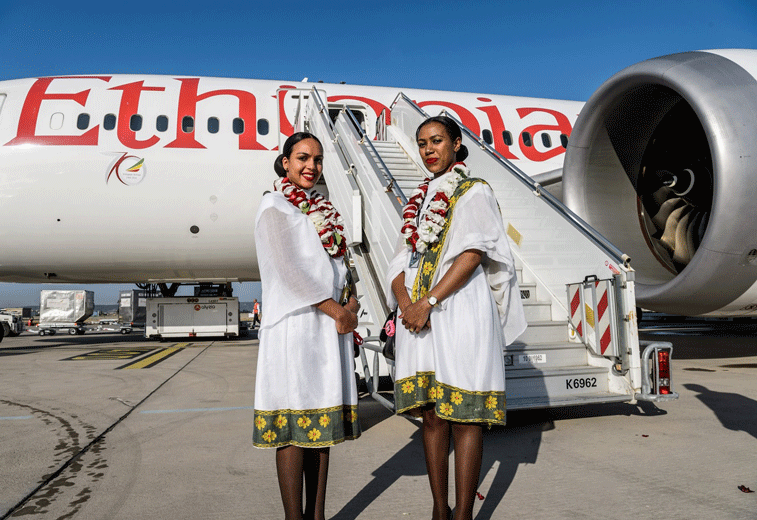
The Zimbabwe Tourism Authority (ZTA) and Ethiopian Airlines (ET) have signed a Memorandum of Understanding (MOU.) The African Aviation Giant, Ethiopian Airlines are the official airline for the 12th Edition of the Sanganai/Hlanganani World Tourism Expo. ZTA signed an MOU with ET today ahead of the tourism expo.
Speaking on the sidelines of the signing ceremony, Ethiopian Country Manager, Mrs Wogayehu Terefe said, the Airline was already enjoying frequent flights into Zimbabwe.
Zimbabwe Tourism Authority’s Head of Corporate Affairs, Godfrey ‘Chief’ Koti said, the Country was delighted to have partnerships of that magnitude as they encourage trade in the tourism sector.
Koti also revealed that some international buyers have already arrived in the country and have started pre-Sanganai/Hlanganani tours to Nyanga, Gonarezhou and Victoria Falls. The tours will cover the whole of Zimbabwe and will give the buyers the first-hand experience of the tourist destinations and activities available for visitors to Zimbabwe.
This year’s edition of annual tourism expo will be held in Bulawayo, Zimbabwe at the Zimbabwe International Exhibition Centre (ZITF Grounds) from September 12 -14, 2019. Over 280 buyers, exhibitors and media are expected to attend and expo. – Pindula News
Zimparks invites bids for photographic site leases
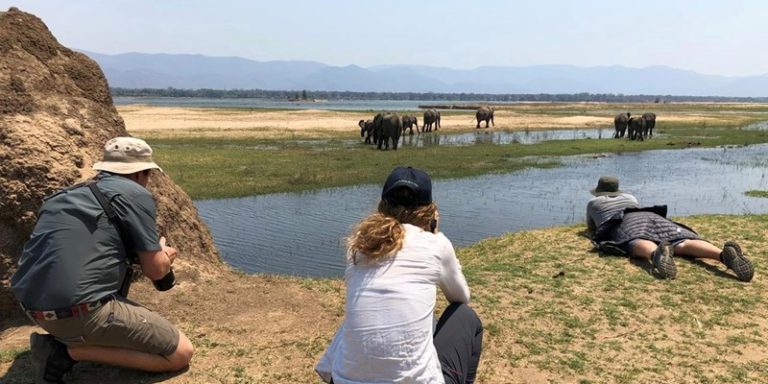
Zimbabwe Parks and Wildlife Management Authority (Zimparks) is inviting tenders for the leasing and development of facilities and activities for photographic safaris within Zimbabwe’s national parks.
In a statement, Zimparks says: “The sites will be used specifically for the development of semi-permanent accommodation facilities and photographic activities whose developments shall be guided by an Environmental Impact Assessment as provided in the Environmental Management Act.”
Some of the parks with leasing facilities include Hwange National Park, Zambezi National Park, Chivero Recreational Park, Chizarira National Park, and Darwendale Recreational Park. – Tourism Update
NRZ partners ZTA to market its safari steam trains and museum
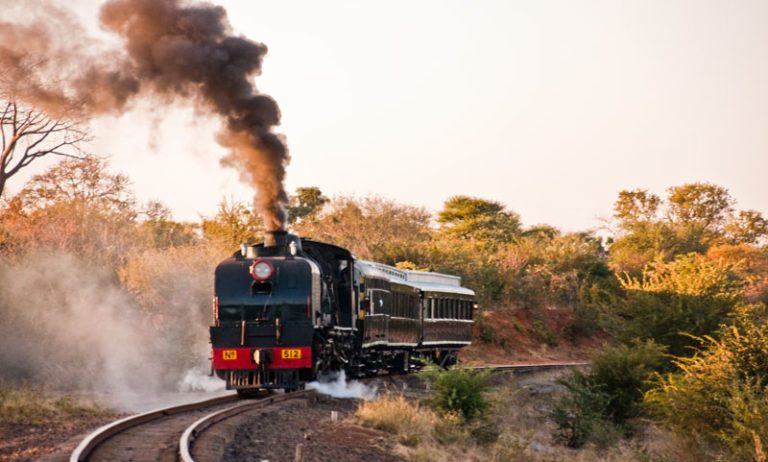
National Railways of Zimbabwe (NRZ) has partnered the Zimbabwe Tourism Authority (ZTA) to market its safari steam trains and museum during this year’s Sanganai/Hlanganani World Tourism Expo.
The fair, kicking off on Thursday next week at the Zimbabwe International Exhibition Centre in Bulawayo, will be graced by over 170 international buyers.
As part of the agreement, a high-profile reception for buyers and the media will be held at the NRZ Museum at Raylton Club on September 12.
Guests will be taken to the museum from Bulawayo Station by a steam train, National Railways of Zimbabwe spokesperson Nyasha Maravanyika said in a statement yesterday.
NRZ, through its rail leisure unit, runs steam excursions which promote domestic and international tourism, and also operates a museum chronicling the history of railways in the country
since the arrival of the first train in Bulawayo in 1897.
“While safari steam trains and the museum are popular tourist attractions, they have mainly been patronised by locals, with schoolchildren making the bulk of visitors to the museum,”
Maravanyika said.
He said the partnership with the Zimbabwe Tourism Authority would open NRZ tourism products to new international markets, particularly from Asia, as buyers and international journalists from that continent would
be privileged to enjoy first-hand experience riding on a steam train as well as view displays at the museum.
“The presence of international buyers and journalists would help raise NRZ safari steam trains’ international profile,” he said.
The National Railways of Zimbabwe Museum was opened in 1972 to commemorate the 75th anniversary of the arrival of the first train in Bulawayo. It houses historic milestones in the development of railway lines
in Africa and Zimbabwe.
The museum has an impressive collection of steam and diesel locomotives, construction and recovery equipment, Rhodes’ coach as well as a collection of priceless photos.
Rail Leisure Steam Safaris operates vintage steam locomotives, which are popular with steam enthusiasts.
The expo will also showcase premier class coaches and joy rides.
The NRZ has, in the past, worked with United Kingdom-based Geoff Cook Safaris and Farrail Safaris of Germany in organising annual tours into Zimbabwe for steam train enthusiasts. – NewsDay