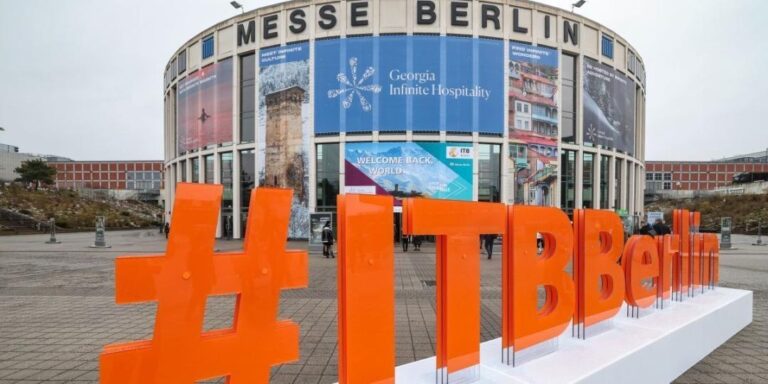
The world’s leading travel trade show, ITB Berlin, this year recorded nearly 100 000 attendees, and more than 5 500 exhibitors from 170 countries occupying all 27 exhibition halls at the Berlin Exhibition Grounds earlier this month.
“ITB Berlin once again mirrored industry developments. The mood among exhibitors, visitors and speakers was very positive throughout. They generally agreed that people’s desire to travel is not just satisfying pent-up demand after the pandemic, but that it will remain basically stable. Neither inflation nor high energy prices appear to be curbing demand,” commented Dr Mario Tobias, CEO of Messe Berlin.
The ITB Berlin Convention also took place in parallel with the three-day show and featured high-profile attendees and 400 leading international speakers at 200 sessions and 17 theme tracks discussing trends and innovations.
All in all, around 24 000 attendees came to the panels, discussions, keynote speeches and lectures.
Tourism community remains on course for success
The ITB Buyers Circle with its 1 300 senior buyers, served as an industry barometer and underlined the importance of the trade show as a leading business platform.
Together with the management consultancy Dr. Fried & Partner, ITB Berlin compiled the new Global Travel Buyer Index. The survey asked several hundred Buyers Circle members about the economic mood and their business goals.
The findings reflected a positive mood throughout regarding the market situation and provided an optimistic outlook for business over the next six months.
The Team South Africa delegation at ITB Berlin – led by South African Tourism CEO, Nombulelo Guliwe and joined by 63 exhibitors including 14 SMMEs – has also returned to SA optimistic, having largely achieved their goals of good meetings with buyers and new business prospects.
The prevailing message throughout conversations at the Web in Travel conference held at Cape Town’s Innovation City last week was that technology has the power to transform the travel industry. But whether it’s AI, e-commerce, or payments technology being deployed in Africa, it will require unique thinking to cater for its various markets and customer demands.
Christian Bombrun, CEO of Digital Platforms for MTN, said 287 million people accessed the Internet through mobile in Africa. With good network coverage, which is growing “super-fast” in Africa, and smartphone penetration of 55%, mobile connectivity dominates in the African market.
This dominance is also reflected in mobile service providers’ foray into other digital services such as financial services and marketing.
While mobile is definitely king, Bayo Adedeji, CEO of Wakanow, Nigeria’s largest online travel platform, said in the African market, operators still needed to consider a hybrid business model in which people had the ability to shop online, but also to deal with a real person. “45% of our transactions originate online but people want to see who they’re paying.”
Expedia’s global Path to Purchase research found that, in the 45 days leading up to travel, 80% of travellers used an online travel agency, 61% used a search engine, and 58% used social media for inspiration.
But, added Adedeji: “In Nigeria, which is the second-largest market in Africa, only 20% of customers are online.” Ease of payment is also a major issue, with just 4% of his customers paying by card.
Jonathan Smit, founder of payments platform Payfast, said in South Africa e-commerce was still not the predominant way of doing business.
“If you had to guess what percentage of commerce happens online, in South Africa it’s only 3% and that’s a fairly developed market.”
In other emerging markets, household income has played an important role in the growth of online travel.
Ross Veitch, CEO of online booking platform Wego, said: “In China, across South East Asia and India, the real key for travel generally, and online travel specifically, to take off was when incomes went above $10 000 per household per year. In the African context, you’ve got the added complexity of really poor (air) connectivity across the continent so people are paying more to travel.”
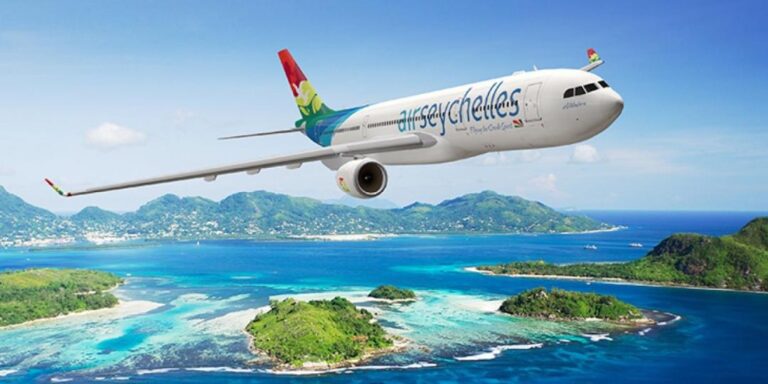
Tourism Seychelles and national airline Air Seychelles have solidified their commitment to promoting Seychelles as a premier tourist destination through a Memorandum of Understanding (MOU) signed at Botanical House last week.
The MOU was signed by Sherin Francis, Principal Secretary for Tourism Seychelles, and Captain Sandy Benoiton, CEO of Air Seychelles.
The partnership aims to enhance visibility and attract more visitors to the archipelago by leveraging joint activities in targeted markets. Under the agreement, both parties will collaborate closely on various marketing initiatives. They will utilise a range of communication channels, including social media platforms, to showcase the unique offerings of Seychelles to potential travellers worldwide.
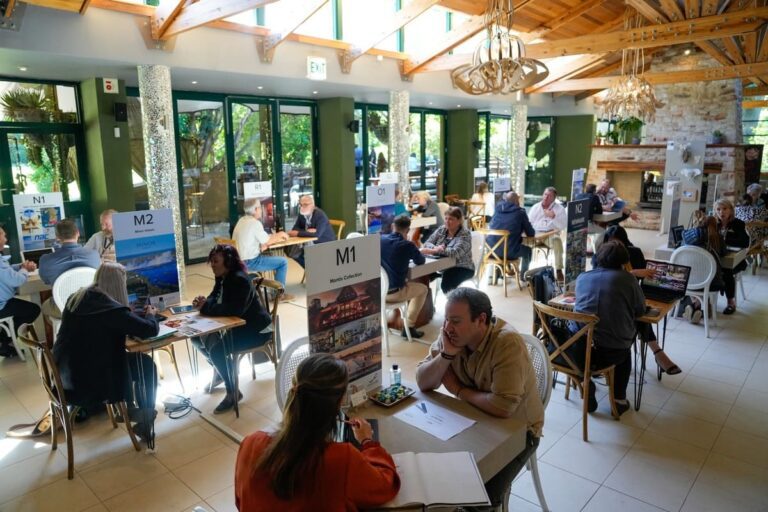
Cape Town 20 March 2024– As demand for luxury African travel experiences rebounds, ILTM Africa returns to Cape Town for its 9th edition. Under the theme ‘Step Inside ILTM Africa’, the event will once again bring the very best of luxury African travel to the world’s most prestigious buyers from April 7-9, 2024.
Hosted at the iconic Kirstenbosch National Botanical Gardens in Cape Town, the invitation-only event facilitates exclusive face-to-face meetings and networking opportunities between luxury travel brands from across Africa and the Indian Ocean islands with the industry’s top international travel advisors.
To meet this rising demand, ILTM Africa 2024 provides the ideal platform for exhibitors to showcase their offerings to a highly targeted audience of pre-qualified buyers, ensuring they capture a share of this burgeoning luxury market. Booking platforms report a doubling of trips valued over $3,800 since 2019, particularly for safari adventures, making the appetite for luxury African travel undeniable.
Megan De Jager, Portfolio Director – Travel, Tourism at RX Africa.
Megan De Jager, Portfolio Director – Travel, Tourism & RX Africa Marketing at RX Africa, says: “With three-quarters of attendees having final purchasing power, ILTM Africa enables meaningful sales conversations from the moment you arrive. The event format will also offer ILTM Africa’s first-ever TED Talk style presentation of the 2024 Trend Report.”
This year’s edition will feature an impressive collection of luxury hotel partners spanning the continent, including The Last Word Hospitality and Southern Sun. High-end local experiences will also be showcased through partners like Cape Town Tourism, Okavango Gin Company and Cape Cobra with interactive activations on the show floor.
Uniquely celebrating the destination, the Host City of Cape Town will play a starring role. The City of Cape Town’s Executive Mayor Geordin Hill-Lewis shares: “We are honoured to welcome the prestigious ILTM Africa back to our world-renowned city. This event aligns perfectly with our focus on driving luxury tourism that allows visitors to immerse themselves in the authentic Cape Town experience.”
From an exquisite picnic in the historic Kirstenbosch Gardens hosted by The Diamond Works to Shimansky’s ‘A Night of Art and Celebration’ at the Norval Foundation art museum, the exclusive agenda offers ample opportunity for buyers and exhibitors to organically connect. Other event sponsors include Spier Resort Management, GOLD Restaurant, Afrikoa Lux Chocolate, Terre Pausible wines, and African Hub. Exhibitors also include Healing Earth, Cape Island, Numuti Drinks and Percy Koji Wines.
The event will also launch the highly anticipated annual Africa Travel Week Trends Report 2024, exploring the biggest shifts impacting luxury African travel like over-tourism, culinary experiences, agritourism and more. This is a report like no other and one not to be missed.
Don’t miss your chance to get in front of the advisors planning the world’s most exclusive African itineraries. A limited number of exhibitor packages are still available – secure your presence at https://www.iltm.com/africa/en-gb.html.
For more details on ILTM Africa 2024, including hosted media participants and evolving event plans, follow #ILTMAfrica or visit the website.
ZIMBABWE’S tourism receipts increased by a remarkable 22 percent last year to reach US$1,1 billion, while international tourist arrivals stood at 1,6 million, up from one million in 2022, signalling a strong recovery of the sector following a devastating Covid-19 pandemic.
The tourism industry, which is one of the country’s major economic sectors contributing at least 5 percent to the gross domestic product, was hardest hit as the world imposed travel restrictions and national lockdowns to combat Covid-19, a respiratory infection that was first detected in China in December 2019 before spreading worldwide.
In 2022, the sector recorded US$911 million in revenues. Since the lifting of travel restrictions and national lockdowns by the World Health Organisation in 2022, Zimbabwe’s tourism sector and that of the globe have been on a major rebound as people visited the country on business and educational missions, as well as leisure activities like safari hunting and sporting.
TikTok, the social media juggernaut known for its bite-sized bursts of creativity, has become a travel inspiration haven. From captivating drone footage of hidden waterfalls to hilarious airport mishaps, the platform thrives on user-generated content that fuels wanderlust for millennials and Gen Z alike. But a potential ban on TikTok in the US casts a long shadow, raising concerns about the impact on both travel and the marketing strategies that have come to rely on it.
TikTok Travel: A Match Made in Wanderlust
Travellers today are increasingly turning to social media for inspiration, and TikTok’s unique format makes it a perfect travel companion. Short, captivating videos showcase the world’s hidden gems and bustling cityscapes in a way static images simply can’t. Imagine soaring over Iceland’s glaciers on a drone or getting lost in the vibrant chaos of a Marrakech market, all within a minute. This visual storytelling allows viewers to virtually “try before they fly,” igniting a desire to explore.
Beyond the captivating visuals, TikTok fosters a sense of authenticity. Travel influencers and everyday users share their genuine experiences, recommendations, and travel hacks, creating a sense of trust and connection with destinations that brochures and websites often struggle to achieve. Hashtags like #TravelTok and challenges like “pack with me for…” build a vibrant online community where users discover new destinations, share experiences, and connect with like-minded travellers.
The Travel Industry Prepares for a Bump on the Road
The potential ban on TikTok would be a significant blow to the travel industry, which has strategically leveraged the platform to reach new audiences and showcase destinations in a captivating way. Travel brands have effectively utilized TikTok to create engaging ad formats that seamlessly blend into user feeds, sparking wanderlust and driving brand awareness. Destination tourism boards have also embraced the platform, using user-generated content campaigns to showcase their offerings with an authenticity that traditional advertising often lacks. Some travel companies have even integrated booking capabilities directly within the app, allowing users to transition from inspiration to action in a heartbeat.
Marketing in a World Without Scrolling
If a TikTok ban were to materialize, travel marketers would need to adapt their strategies. Platforms like Instagram Reels and YouTube Shorts, which offer similar functionalities for short-form video content, would likely see increased focus. Building strong communities on existing platforms through interactive content, contests, and influencer collaborations would become even more crucial. Travel companies might also explore platforms like YouTube for longer-form content, offering virtual tours and fostering deeper audience engagement.
Beyond Travel: A Broader Marketing Ecosystem at Stake
The potential impact of a TikTok ban extends far beyond the travel industry. Brands across industries have embraced the platform’s ability to connect with audiences in a fun and engaging way. Creative and memorable ad formats resonate with younger demographics, while collaborations with TikTok influencers have become a powerful tool for brand awareness and product promotion. User-generated content campaigns leverage the power of authenticity to build trust around brands and products. If a ban were to occur, marketers across the board would have to explore alternative avenues to achieve these goals.
The Road Ahead: Adaptability is Key
The possibility of a TikTok ban underscores the ever-evolving nature of the digital landscape. While its impact would be significant, the travel and marketing industries are known for their adaptability. By exploring alternative platforms, fostering stronger online communities, and embracing new storytelling formats, these industries can navigate this potential change and continue to connect with audiences and inspire a sense of wanderlust, one scroll (or click) at a time.
Despite the shadow of a potential ban looming large, TikTok’s grip on the American market seems stronger than ever. The social media app, known for its viral short-form videos, has reportedly raked in a staggering $16 billion in revenue within the US for the year 2023. This phenomenal success story, however, is tinged with uncertainty as the US government continues to weigh the possibility of a ban due to national security concerns.
This surge in revenue paints a clear picture: TikTok has become an undeniable force in the American social media landscape. It has captivated the hearts (and thumbs) of a vast user base, particularly Gen Z, who find themselves endlessly entertained by the app’s endless stream of dance challenges, funny skits, and educational content. This engagement translates into significant advertising dollars, making the US a crucial market for TikTok’s global dominance.
However, a dark cloud hangs over this success story. The US government has expressed concerns about potential security risks associated with TikTok, which is owned by the Chinese tech giant ByteDance. These concerns center around the possibility of user data being accessed by the Chinese government, which could pose national security threats. While TikTok has vehemently denied these accusations, the threat of a ban remains a significant hurdle.
The potential consequences of such a ban would be far-reaching. Not only would millions of American users lose access to their favourite platform, but the economic impact would be substantial. The $16 billion in revenue signifies not just TikTok’s own success, but also the vast ecosystem it supports – advertising agencies, content creators, and countless other businesses that have thrived alongside the app. A ban would disrupt this ecosystem, potentially leading to job losses and economic hardship.
This looming threat isn’t just about financial figures; it’s about the impact on a vibrant online community. TikTok has become a platform for countless creators to express themselves, build audiences, and even launch careers. Aspiring musicians, comedians, and artists have found a global stage on TikTok, and a ban would stifle this creative expression and entrepreneurial spirit.
The debate surrounding a potential ban is complex. National security concerns are undoubtedly a serious matter, and ensuring data privacy is paramount. However, completely shutting down a platform that has become so deeply integrated into American culture and the digital economy warrants a more nuanced approach.
There’s a possibility of finding a middle ground. Increased scrutiny and stricter regulations on data security could be implemented to address national security concerns. Additionally, fostering transparency and collaboration between TikTok and the US government could pave the way for a solution that prioritizes both security and the platform’s continued operation in the US.
The future of TikTok in the US remains uncertain. Whether the app can weather the storm of potential bans and continue its meteoric rise, or whether it will be forced to cede its American audience, remains to be seen. One thing is clear: the stakes are high, not just for TikTok’s bottom line, but for the millions of users, creators, and businesses that have come to rely on this social media giant.
The Global Mind Project’s latest report, the “Mental State of the World”, has some concerning news. According to the report, mental well-being has been on the decline worldwide since the start of the Covid-19 pandemic.
The report gathered responses from over 500 000 people in 71 countries, covering nine regions including Africa. It used six-dimensional scores to measure different aspects of mental health, such as mood, social self, motivation, adaptability, cognition, and mind-body connection.
The report highlights a worrying trend – the decline in mental well-being that began in 2019 and continued through the pandemic has not shown any signs of improvement.
Many people may have hoped that once lockdowns ended and the threat of Covid-19 decreased, mental health would start to recover.
However, data from 64 countries suggests otherwise, indicating that the effects of decreased mental well-being have become the new normal.
The report highlights a worrying trend – the decline in mental well-being that began in 2019 and continued through the COVID-19 pandemic has not shown any signs of improvement. Picture: Stan B /Unsplash
The Global Mind Project’s work aligns with the World Health Organization’s definition of mental well-being, which focuses on an individual’s ability to handle life’s stresses and contribute to society.
The project aims to provide a comprehensive and economically relevant perspective on emotional, social, and cognitive capabilities, rather than just traditional views of happiness or life satisfaction.
The World Happiness Report, which assesses global happiness in over 150 countries, has declared Finland the happiest for the sixth consecutive year.
Among the top-ranking countries, Nordic nations reign supreme, with Denmark securing the second position and Iceland following at number three.
The report also explores happiness inequality, analysing the gap between the most and least happy populations.
Findings suggest that countries with smaller happiness gaps tend to have happier citizens. The report also looks at happiness inequality, finding that countries with smaller happiness gaps tend to have happier citizens.
Surprisingly, the report challenges the idea that wealth leads to happiness. It shows that mental well-being has remained the same worldwide since 2021, and the rankings of countries have not changed much.
Many Latin American and African countries are at the top of the happiness rankings, while countries in the Anglosphere are at the bottom.
The report states, “In our annual report for 2021 we showed that the average mental wellbeing scores of the Internet-enabled populations of countries were strongly and significantly negatively correlated with economic metrics such as per capita GDP and even the Human Development Index.”
The UK scored relatively low on the Mental Health Quotient (MHQ) at 49, while over 10 African countries scored above 60 on the MHQ. Tanzania has the highest score at 88, followed closely by Nigeria and Zimbabwe, 83 and 74 respectively.
In the report, Kenya is in 4th place with a Mental Health Quotient of 72. The Democratic Republic of the Congo (DRC) follows closely in 5th place with a score of 72, while Mozambique ranks 6th with a score of 70. Côte d’Ivoire takes the 7th spot with a ranking of 69, followed by Cameroon at 67, and Tunisia also at 67.
Securing the 10th spot is Angola with a ranking of 64.
In Africa, happiness gaps are widening in 2024. In 2023, the report highlighted the top 10 happiest countries on the continent, with Mauritius claiming the first spot with a happiness score of 5.902.
Algeria closely followed with a score of 5.392, and South Africa secured the third position with a score of 5.275. Other countries in the top 10, in order, were Congo DRC, Guinea, Ivory Coast, Gabon, Nigeria, Cameroon, and Mozambique.
The 2024 Sapien Lab Mental State of the World report revealed that South Africa, with a mental health quotient of 50, ranks 69 out of 71 countries and has the greatest percentage of distressed or struggling respondents at 35%.
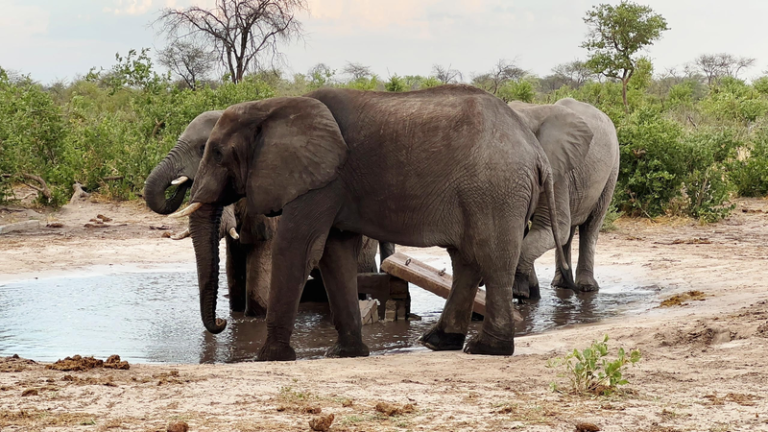
Botswana’s vast landscapes are a haven for wildlife. From the colossal herds of over 100,000 elephants to the graceful giraffes and galloping zebras, the country boasts an unparalleled biodiversity. This abundance isn’t just a source of national pride; it’s woven into the very fabric of Botswana’s economy, particularly for rural communities.
For these communities, wildlife is more than just a beautiful sight – it’s their lifeline. Trophy hunting, a controversial practice for some, plays a crucial role in generating income for conservation efforts and local livelihoods. Proceeds from trophy hunting pay for vital park management, anti-poaching patrols, and community development initiatives. It’s a system that has ensured healthy wildlife populations while creating sustainable economic opportunities.
But a dark cloud looms on the horizon. The UK’s proposed ban on trophy hunting imports threatens to disrupt this delicate balance. While the UK may not be the biggest player in Botswana’s trophy hunting market, its decision could have a ripple effect, potentially influencing similar bans in other European and US markets. This domino effect could be devastating for Southern Africa’s wildlife economies and the communities that depend on them.
Take Xhauxhwatubi Safaris, a community-based organization on the fringes of the Makgadikgadi National Park. This organization provides invaluable employment opportunities for local residents, empowering women like Baboloki Maizaira to work as professional guides. The income generated from trophy hunting and tourism allows Xhauxhwatubi Safaris to invest in new vehicles, acquire land for a lodge, and create even more jobs within the community.
A similar story unfolds at Phuduhudu Safaris, another community-based organization facing potential losses from the ban. These organizations represent countless others across Botswana, all facing an uncertain future if the UK’s ban becomes a reality.
The Botswana Wildlife Association (BWA) echoes these concerns. The BWA emphasizes that responsible trophy hunting, when strictly regulated, can be a powerful tool for conservation. The revenue generated helps fund anti-poaching efforts, habitat protection, and research initiatives – all crucial for safeguarding wildlife populations. Without this vital funding, the long-term sustainability of these populations could be at risk.
The potential impact goes beyond just economic hardship. Reduced resources for wildlife management could lead to an increase in human-wildlife conflict as communities struggle to coexist with animals that were previously managed through hunting programs.
Botswana argues that the proposed ban is a form of punishment for their successful wildlife management practices. They have demonstrably maintained healthy animal populations, and the ban undermines their efforts.
The debate surrounding trophy hunting is complex, with strong arguments on both sides. However, the potential consequences of the UK’s proposed ban for Botswana’s wildlife and its communities cannot be ignored. A more nuanced approach is needed, one that acknowledges the economic and ecological benefits of responsible trophy hunting while addressing ethical concerns. Only then can we ensure a future where Botswana’s wildlife paradise continues to thrive, alongside the communities who call it home.
How do we define the metaverse? How will it impact our reality in the travel space? The metaverse merges virtual, augmented, and physical reality, blurring the lines between digital and physical worlds. Gamers are experiencing this early version of the metaverse not only for playing, but also for socializing, shopping, and living unique experiences. For example, World of Warcraft is a persistent virtual world where players can buy and sell goods. Similarly, Fortnite has virtual experiences like concerts and even an interactive Martin Luther King Museum.
We also see use cases expanding, covering mainly e-commerce, fashion, education, and manufacturing. Companies in these domains are using the metaverse for branding and marketing purposes, for learning and development of employees and for communication and collaboration.
As it stands, the metaverse is a collection of different interactive worlds that can be used to explore, create, collaborate, and buy different experiences. Just like the adolescence of the internet in the 90s, it may take a while for the metaverse to take shape, but its key features are already here.
Every year, US$54 billion is spent on virtual goods – that’s double the amount spent buying music. A consumer study of 3,000 people across the world found that 86% had already purchased a virtual good, with digital fashion at the forefront.
And this is just the beginning. As virtual headsets become more accessible and the metaverse emerges from its adolescence into adulthood—sometime between 2026 and 2030—the early adopters are set to profit the most. McKinsey says that by 2030, the value of the metaverse could reach US$5 trillion.
There is real money here, and all the big tech companies are in on the action. Like the rush to build websites in the late ‘90s and early 2000s, we are now seeing companies and brands rushing to build stores and representations of their products in the metaverse to get in on the action.
How the metaverse will impact travel
The metaverse could complement, replace and /or open new ways to enjoy the travel experience.
In the short-term, the metaverse is expected to bring an enriched inspiration with virtual tours. For example, some companies are already offering virtual tours in VR, giving travelers the possibility to book in the “real world” if they loved what they saw in the virtual tour. Thomas Cook’s VR excursions of Manhattan, for example, offer store visitors a five-minute “taster” of the city; it helped the company increase bookings by 190%.
As we progress on the immersion side, we will start having more credible experiences in the metaverse and we can expect to have an explosion of activities and virtual travel expansion. For instance, in a recent survey conducted by McKinsey on metaverse adoption (more than 3,400 consumers and executives participating), 62% of respondents stated that they were “excited” or “very excited” about the possibility of travel in the metaverse, especially the ability to visit “places I can’t physically go”. Maybe a real-life trip to Egypt could be prompted by a virtual trip through time, to the apex of the ancient Egyptian civilization? Or why not book a trip to the moon? Unlimited by our normal concepts of time and space, we really can go anywhere our minds can dream up.
As adoption increases, the metaverse could become a new distribution channel offering physical trips or mixed trips, with more personalized inspiration and search, thanks to real-time information and enriched data. Travel agents could interact with potential travelers in the metaverse in real-time and have direct access to their feedback: like the captain at the helm of a ship, they could take travelers to different cities or destinations in that moment, to inspire them to plan and book the entire real-life trip in the metaverse.
On the business travel side, some trips could be replaced by enhanced collaboration tools, a transition that has been accelerated by COVID. The metaverse could host new kinds of virtual/hybrid meetings and events.
How are travel companies approaching the metaverse?
Right now, companies are using the metaverse mostly for brand awareness and retail. For example, Millennium Hotels has created a virtual hotel in the metaverse, ‘Decentraland’; Vueling will open a new sales channel in the metaverse, ‘Next Earth’; and Qatar is proposing a virtual representation of its different cabins.
Amadeus is already working with partners and customers to explore the full value that the metaverse can bring to enhance the travel experience.
Amadeus have launched a Search & Inspire Co-Innovation project with Microsoft to explore how user data and conversational AI can offer personalized travel inspiration to users. Amadeus are working at the Microsoft VR Studio in London, using Microsoft AltSpaceVR, to visually demonstrate what search & inspire could look like in the metaverse.